Search for web design Cambodia and Google returns a local pack of three agencies, a stack of directory listings, and a comparison article that names five providers without quoting a single price. The directories are no better: Sortlist lists Cambodian web design budgets as ranging from EUR 1,000 to EUR 1,000,000, which tells a buyer nothing. Around 320 people run that search every month, and almost none of them find out what a website actually costs, how long it takes, or how to tell two agencies apart. This article answers those three questions with real numbers.
What does a web design agency in Cambodia actually deliver?
A web design agency in Cambodia delivers a finished, working website, not a set of image files. The confusion is worth clearing up early, because a large share of the providers listed in Cambodian directories sell only one slice of the work and leave the rest to the client.
A complete engagement covers four deliverables:
- Strategy: market and competitor analysis, positioning, and the communication angles the site will carry.
- Branding: logo, colour palette, typography, iconography, and a style guide that keeps everything consistent.
- UX/UI design: site architecture, then high fidelity desktop and mobile mockups produced in Figma.
- Development: pixel accurate integration, CMS setup, e-commerce or API integrations where needed, and testing across devices.
Anything narrower is a partial service. A designer who hands over Figma files has not built you a website. A developer who integrates a template you supplied has not solved your positioning. Both are legitimate purchases, but you should know which one you are making before you compare quotes.
Web design Cambodia: what does a website really cost?
Web design Cambodia pricing at TechFlow Agency starts at $300 per page for design alone, $350 per page for development alone, and $500 per page for the two combined. Because most business sites land in the same size bracket, the practical figures matter more than the per page rate. For a 6 to 7 page site:
| Scope | Per page | Typical 6 to 7 page site |
|---|---|---|
| Design only (branding, UX research, Figma mockups, copywriting) | from $300 | $1,800 to $2,100 |
| Development only (build, CMS, SEO groundwork, integrations) | from $350 | $2,100 to $2,450 |
| Design and development together | from $500 | $3,000 to $3,500 |
Every tier includes unlimited revisions and responsive layouts for mobile, tablet, and desktop. The full range sits on our rates page.
We publish these figures because the alternative serves nobody. A range of EUR 1,000 to EUR 1,000,000, which is what Sortlist currently shows for Cambodian web design, is not a price. It is a refusal to answer, and it forces every buyer into a discovery call just to learn whether a conversation is worth having.
What moves the price up or down
Four variables account for nearly all the spread between a $1,800 project and a $3,500 one:
- Page count: the single biggest driver, since pricing is built per page.
- Branding scope: a company that already owns a logo, palette, and style guide skips the branding phase entirely.
- Functionality: a showcase site costs less than an online store, which costs less than a custom web application with API integrations.
- Content readiness: copywriting and asset production add work when the client has neither.
Two things that do not move the price in the way people expect: revisions, which are unlimited, and language. A bilingual site adds pages, and the per page rate handles it.
Web design Cambodia: how long does a build take?
A web design Cambodia project runs 4 to 12 weeks from kickoff to launch, and the spread is driven by complexity rather than by agency speed. The breakdown we work to:
- Showcase site: 4 to 8 weeks.
- E-commerce or custom web application: 10 to 12 weeks.
The schedule is fixed at the start of the project rather than estimated loosely and revised later. Two factors extend it in practice, and both sit on the client side: slow feedback on mockups, and content that arrives late. An agency can hold a timeline it controls, but it cannot approve its own designs.
How do you choose between an agency, a freelancer, and an overseas team?
Choosing between an agency, a freelancer, and an overseas team depends on how much of the work you can absorb yourself. Each option is genuinely the right answer for a different situation.
- A freelancer suits a small, well specified job where you already know what you want and can direct the work. You supply the brief, the content, and the judgement. Cost is lowest, coordination burden is highest.
- A full service digital agency in Cambodia suits a company that needs positioning, identity, and build handled as one project. You buy a process rather than a pair of hands. Cost is higher, and the coordination burden moves off your desk.
- An overseas team suits large volumes of production work at a low unit rate. You lose the timezone overlap, the site visits, and the ability to read the local market.
Four checks separate a serious provider from a listing in a directory, whichever category it falls into:
- Do they show finished, live sites, or only mockups? Screenshots of Figma boards are not proof of delivery. Our work is public for exactly this reason.
- Do they publish a price and a timeline, or do both require a call?
- Do they name the tools they build on, and can they explain why they chose them for your case?
- Do they say what happens after launch, in writing?
Where the agencies actually are: Phnom Penh and Siem Reap
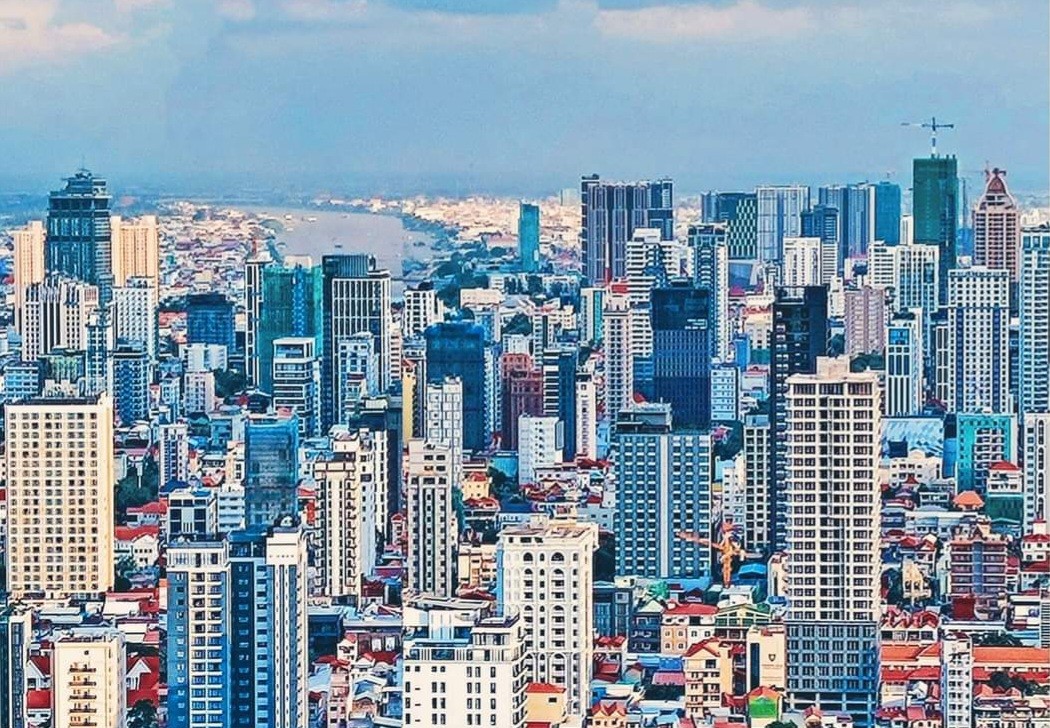
The Cambodian market concentrates in two cities, and searching for web design in Phnom Penh returns a different set of businesses than searching in Siem Reap. Phnom Penh holds the agencies working with corporates, financial services, and international groups. Siem Reap holds a cluster built largely around tourism, hospitality, and restaurants, which is visible in the client lists on their own sites.
The wider pool is small. TechBehemoths lists 14 web design agencies for the entire country. That has one practical consequence for buyers: the shortlist is short enough to research properly. You can look at every live site an agency has shipped in an afternoon, which is not true in Paris, Bangkok, or Singapore.
We work from Paris and Phnom Penh, which covers the two markets our clients sit in. Projects such as Eureka Cambodia run locally, while French clients keep a team in their own timezone and language.
Website design or website development: what are you buying?
Website design and website development are two separate deliverables that are frequently sold under one word, and the ambiguity is where most budget disputes start. Design produces the decisions: architecture, layout, brand system, and mockups. Development produces the working artefact: the built pages, the CMS your team edits, the integrations, and the tested, responsive result.
Website development in Cambodia is quoted separately for a reason. A client who already has a design system, or who has an in house designer, buys development alone at $350 per page. A client who has a developer but no visual direction buys design alone at $300 per page.
The tools we build on, by case:
- Webflow for most business sites, where a visual CMS and clean, fast pages matter more than custom backend logic.
- Shopify for online stores that need a proven commerce engine rather than a bespoke one.
- Bubble, WeWeb, and Xano when the project is closer to a web application than a website, with real data models behind it.
- Zapier and Make for the automation layer connecting a site to a CRM, a form tool, or a billing system.
The five steps a serious web project follows
Our method runs in five stages, and each one closes before the next opens. The sequence is what keeps a project inside its 4 to 12 week window.
- Project framework: a first meeting to define objectives, whether that is visibility, lead generation, or user experience, and to identify the obstacles in the way.
- Research and strategy: market and competitor analysis, then a distinct positioning and the communication angles that carry it.
- Branding and visual identity: brand personality, value proposition, and key messages, then the visual system and a written style guide.
- UX/UI design: information architecture first, then high fidelity mockups in Figma for desktop and mobile, iterated until approved.
- Development and testing: precise integration, then testing for navigation, browser compatibility, and responsiveness before launch.
The full detail sits on our process page.
What happens after the site goes live
Launch is not the end of the engagement. Every project includes three months of free support covering bug fixes and minor adjustments, with maintenance contracts available beyond that for performance and security. Sites are built with SEO groundwork in place: structure, loading speed, content organisation, and mobile compatibility, plus SSL, regular backups, and protection against common attacks.
If you are weighing a web design project in Cambodia, the three numbers worth holding onto are $1,800 to $3,500 for a standard 6 to 7 page site, 4 to 12 weeks from kickoff to launch, and 3 months of support included. When you want those figures applied to your actual scope, book a call and we will put a real quote against it.