
Cambodia's small and medium enterprises are 99.8 percent of the country's business entities and generate 58 percent of its GDP (Cambodia Economic Census 2022, Ministry of Industry, Science, Technology and Innovation). Fewer than 1 in 8 of those entities are actually registered with the Ministry of Commerce, and almost none have a documented sales funnel. Most still run on a Facebook page, a notebook of phone numbers, and whoever picks up the Telegram message first.
A sales funnel in Cambodia is not a landing page with a form on it. It is a 90-day build: a lead source, a CRM pipeline, a response process fast enough to matter, and a way to tell which of the three is actually working. Below is what that build looks like, what it costs to run, and who should commission one now versus wait.
A Sales Funnel for a Cambodian SME Is Four Connected Pieces, Not a Landing Page
A sales funnel for a Cambodian SME is four connected pieces, not one landing page: a lead source that fits where the buyer already is, a structured CRM pipeline that tracks every lead by stage, a qualification step that filters who is worth a human's time, and a measurement layer that shows which channel and which message actually converts. This is the scope a marketing agency in Cambodia should walk through before quoting anything, because each of the four pieces changes the price and the timeline.
Most generic explanations of a sales funnel stop at "awareness, interest, decision, action", a model built for a market where buyers fill out a form and wait for an email. Cambodia's digital behaviour does not run on email. Facebook reaches 14.0 million user identities, 77.9 percent of the population, Messenger reaches 8.9 million, 49.7 percent, and TikTok reaches 11.3 million adults, 97.5 percent of the adult population (DataReportal, Digital 2026 Cambodia).
Picture a Phnom Penh interior design studio that runs ads on Facebook and TikTok, collects leads through a Messenger button, and currently answers them whenever someone has a free minute between site visits. The ads work. The leak is everything after the click: no pipeline, no stage tracking, no rule for who replies first. A funnel does not add a new acquisition channel here. It fixes the three weeks between "interested" and "forgotten".
How Much Does a Sales Funnel Actually Cost to Build and Run in Cambodia?
A sales funnel costs whatever a lead generation build, a CRM setup, and the automation wiring between them cost, sold as one project rather than three invoices. We price our own sales funnel builds in Cambodia on a quote, not a subscription, and we do not publish a number we have not scoped against a real catalogue of ads, pages, and stages, so treat any flat price quoted online with the same suspicion.
What the cost actually buys: a lead generation layer (landing pages, a VSL where the product needs explaining, retargeting for the visitors who did not convert first time), a structured CRM pipeline instead of a spreadsheet, an AI lead qualification step that scores and routes leads before a human sees them, and marketing automation plus a KPI dashboard that ties ad spend to a stage move, not a vanity click. Cambodia's SME segment of the ICT market is growing at an 8.72 percent CAGR through 2031, faster than large enterprises, as SaaS and QR-code payment tools spread (Mordor Intelligence, 2026). The gap is almost always the wiring between them, not the tools themselves.
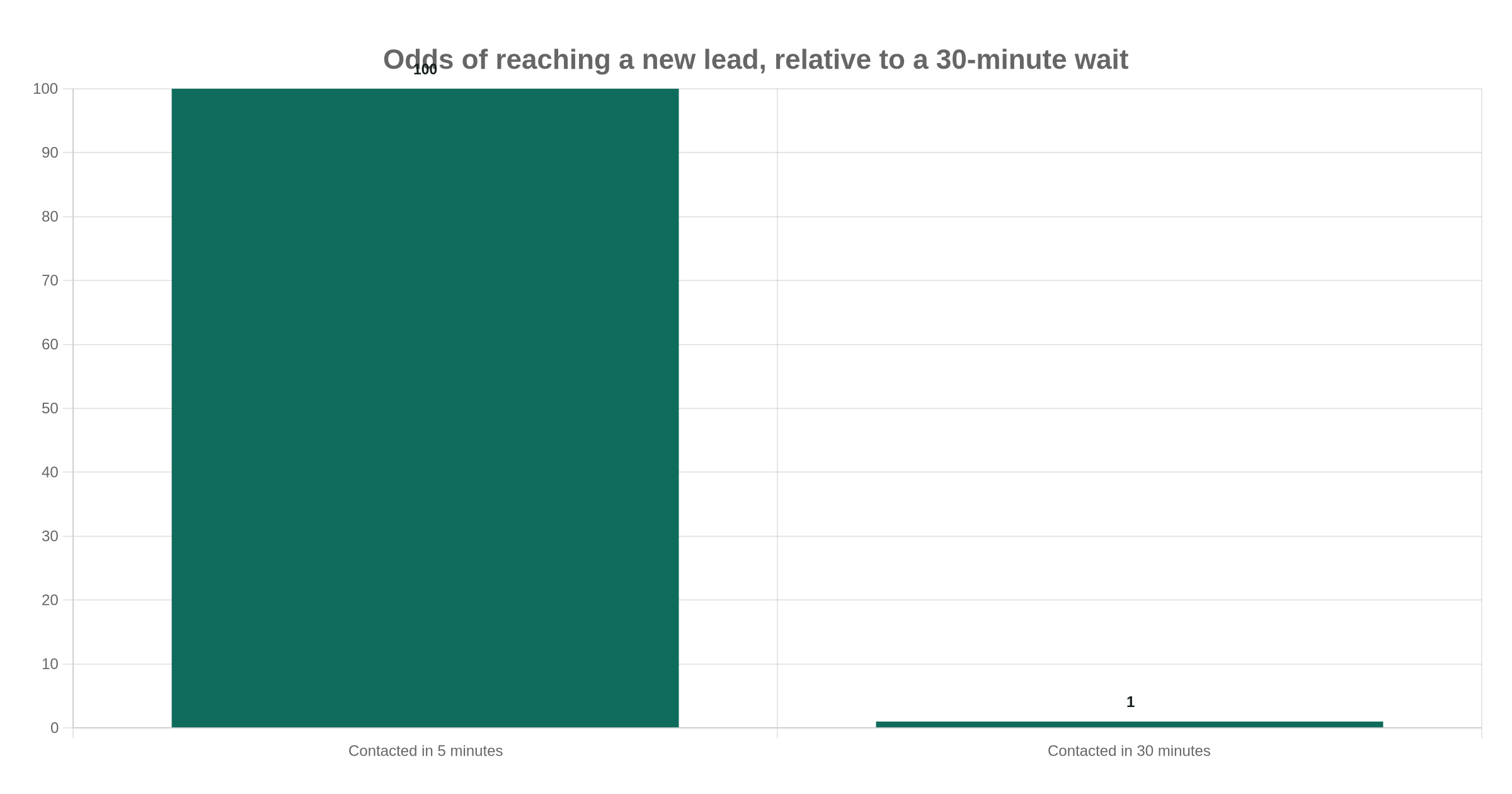
Most Cambodian SMEs buy the landing page before they buy the reply system, and that is backwards. A lead contacted within five minutes is roughly 100 times more likely to be reached than one contacted after thirty, and 21 times more likely to qualify at all (Lead Response Management study, Oldroyd and InsideSales.com, 2007). A retainer with no CRM pipeline attached is a subscription to ad spend, not a sales funnel, and we would not sign one as it stands.
Run the arithmetic on an illustrative scenario: $400 a month on Facebook ads buys 100 leads, so $4 a lead. Say 50 of those leads wait past the 30-minute mark Oldroyd's study flags, and are therefore roughly 21 times less likely to ever qualify. Assume a typical qualify rate of 20 percent for a lead answered within minutes, a round illustrative number, not a measured client figure. The 50 answered promptly would produce about 10 qualified leads; the 50 left waiting, at roughly 1 percent instead of 20 percent, produce under one. That gap, the $200 spent generating 50 leads that return close to nothing instead of the 10 they should have, is lost to the wait alone, before the CRM pipeline or the qualification step does anything. A same-hour reply rule, enforced through routing rather than good intentions, is usually the cheapest fix available before a business spends a single extra dollar on ads.
What Does the 90-Day Build We'd Run Look Like, Lead Speed First?
We sell our own sales funnel system in Cambodia on a 90-day timeline, and lead speed is the first thing we build, not the last. We run these builds from our team in Phnom Penh, on Cambodia's ICT time zone (UTC+7), so a routing question raised in the morning gets answered the same business day, in English or French, rather than queued for a vendor overseas. The sequence runs in four blocks: weeks 1 to 2 map every current lead source and the actual time it takes someone to reply today, often a number nobody in the business has measured; weeks 3 to 6 build the CRM pipeline and connect Messenger, Telegram, and the ad platforms into it through automation tooling such as n8n, so a new lead lands in a stage, not an inbox; weeks 7 to 10 wire an AI qualification step that scores and routes leads before a human touches them, and launch the first retargeting and VSL assets; weeks 11 to 13 run the KPI dashboard against real traffic and tune whichever stage is leaking.
A boutique hotel in Siem Reap running this build would not start with a prettier website. It would start by timing how long a Messenger enquiry about room rates sits unanswered today, often hours, sometimes a full day, then fix that gap with a CRM pipeline and a routing rule before touching a single ad. CRM platforms such as HubSpot or Twenty CRM, and automation layers such as n8n, exist specifically to make that routing automatic rather than a matter of whoever is free.
Who Should Build a Sales Funnel in Cambodia Now, and Who Should Wait?
A Cambodian SME should commission a sales funnel once two things are already true: a real, paid lead source already running, even a modest one, and nobody currently measuring how fast those leads get a reply. Build the funnel to fix a measured leak, not to create demand that does not exist yet.
We would tell a business with no paying customers yet to fix that first; a funnel systematises a process, it does not invent one. For a business that already spends on Facebook or TikTok ads and is simply losing leads to slow replies and no pipeline, a marketing agency in Cambodia earns its fee specifically on that wiring, the part a founder running the business alone rarely has the hours to build. We also price these builds in Cambodia at roughly 35 percent less than a comparable agency in Europe, our own position, not a measured result.
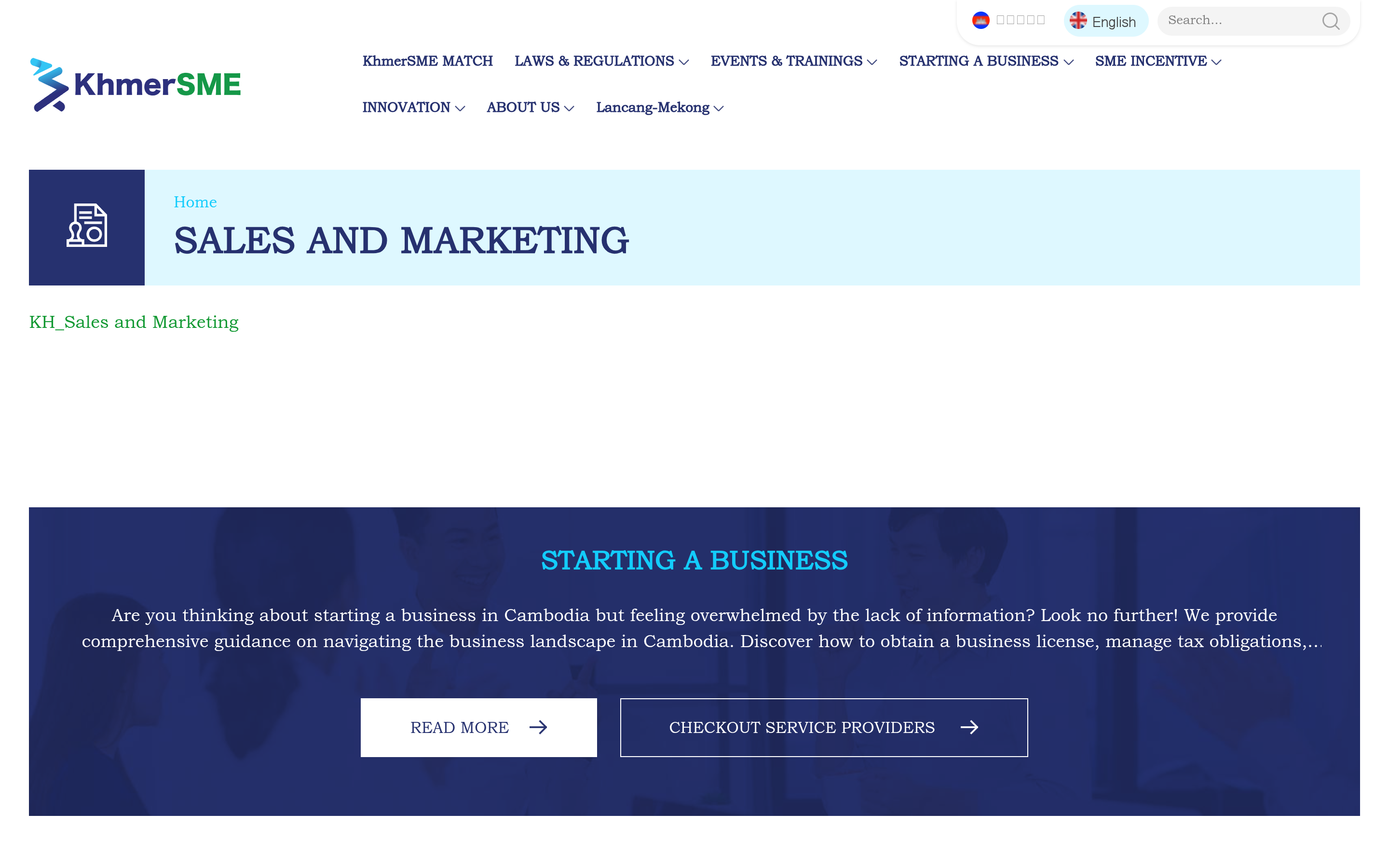
KHMER SME's public sales and marketing page is a reasonable free starting point for general guidance, and it is where this exact search currently ranks alongside training courses and CRM vendor listings. None of it wires a CRM to a Messenger inbox or scores a lead before a human sees it, which is the part a build like ours actually does. A digital marketing agency or an in-house hire can run the ad side alone; a funnel is what connects that ad spend to a pipeline a founder can see.
If leads are already arriving through short-form video, our TikTok marketing playbook covers the acquisition side in more depth than this guide needs to repeat, and an agency based in Phnom Penh running both pieces together, acquisition and pipeline, is usually faster than coordinating two vendors across the same KPI dashboard.
Prefer to chat? Message our founder directly on Telegram (@maxgrolier), or book a call with the team.
Frequently asked questions
What are the stages of a sales funnel?
Most sales funnels run through five stages: awareness, interest, consideration, intent, and purchase, sometimes with a retention stage added after the sale. For a Cambodian SME selling through Facebook or TikTok, the practical version collapses to three working stages inside a CRM pipeline: new lead, qualified, and closed, each with a measured time limit for how long a lead sits before someone acts.
How long does it take to build a sales funnel?
A full sales funnel, lead source, CRM pipeline, AI qualification, and a working KPI dashboard, takes about 90 days end to end on the build we run. A narrower version, just the CRM pipeline and the response automation without new ad creative, can be live in three to four weeks.
Is marketing automation worth it for a small business in Cambodia?
Marketing automation is worth it once a business has more leads arriving than one person can reply to within minutes, which is the point where response time starts costing sales. Below that volume, a documented manual process with a strict reply-time rule often does the same job for less money, and automation becomes worth paying for as volume grows past what one person can track in a spreadsheet.
Do I need a CRM before I need a sales funnel?
A CRM is one piece of a sales funnel, not a separate purchase that comes before it. Buying a CRM license without also building the pipeline stages, the routing rules, and the connection to wherever leads actually arrive (Messenger, Telegram, a web form) leaves a business with a subscription and the same slow replies it had before.
Should I hire a sales funnel agency or build it myself?
A founder with the hours and the patience to learn a CRM, an automation tool, and basic ad tracking can build a simple version alone, and plenty do. A sales funnel agency earns its fee on the parts that take longest to learn under pressure: qualification scoring, multi-channel routing, and a dashboard that actually ties spend to a closed deal, which is usually where a self-built version stalls.
If the pattern above sounds familiar, here is what we would do in your place, in three moves:
- Time your current reply speed this week. Message your own Facebook page or Messenger button as a stranger would, and clock how long the first human reply takes. Most SMEs have never measured this number.
- Fix the routing before adding spend. A CRM pipeline and a same-hour reply rule cost less than a month of extra ad spend, and usually recover more leads than that extra spend would have bought.
- Book the call once you have that number. A measured reply time turns a guess into a scoped sales funnel system, not the other way round.
Book a call once you have your number, or look at recent project work first if you want proof before the call.