
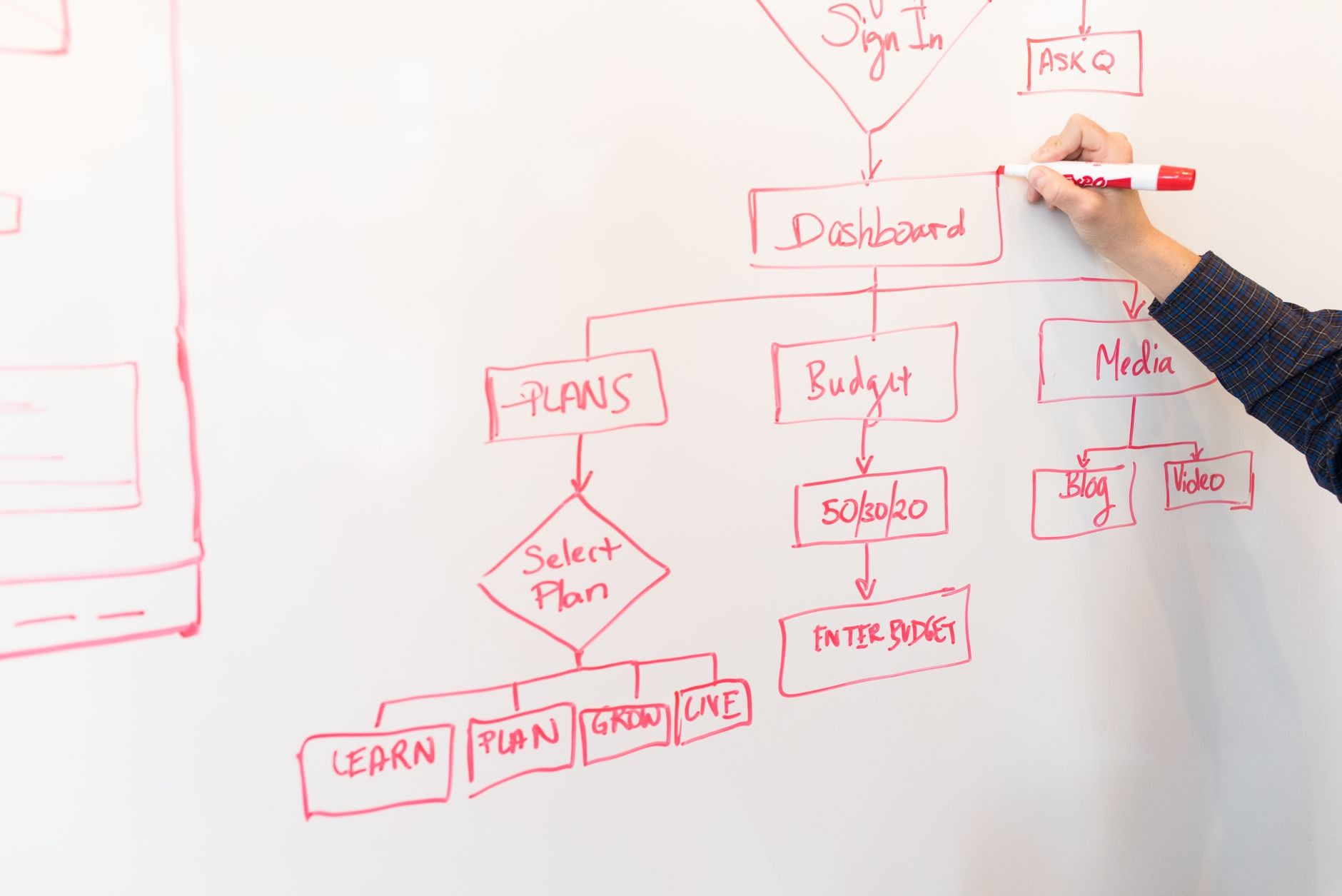
Most "AI agent examples" lists online are the same dozen generic entries dressed up for every country: a customer service bot, a sales assistant, an HR screener. Most of those entries are not agents at all, just a scripted bot wearing an AI label; a real AI agent checks a status, decides what to do next, and only hands off to a person when a condition it was told to respect is actually met. The AI agent examples that actually run in a Cambodian business today are narrower and odder than that definition suggests: a Telegram triage agent, a KHQR reconciliation skill, a customs paperwork checker, built around one specific local process, not a global category label.
That is the gap this article fills. Below: twelve concrete AI agent examples grouped by what they do, a worked scenario for each, a sourced figure, and a ranking by how fast and cheap each one is to actually build in Cambodia, not in a 2026 global pricing guide that never mentions Phnom Penh. None of them are hypothetical categories lifted from a vendor's product page; each one maps to a process a Cambodian business already runs by hand today, which is exactly why the build tiers below can be this specific.
Which AI agent examples actually answer a customer before a human does?
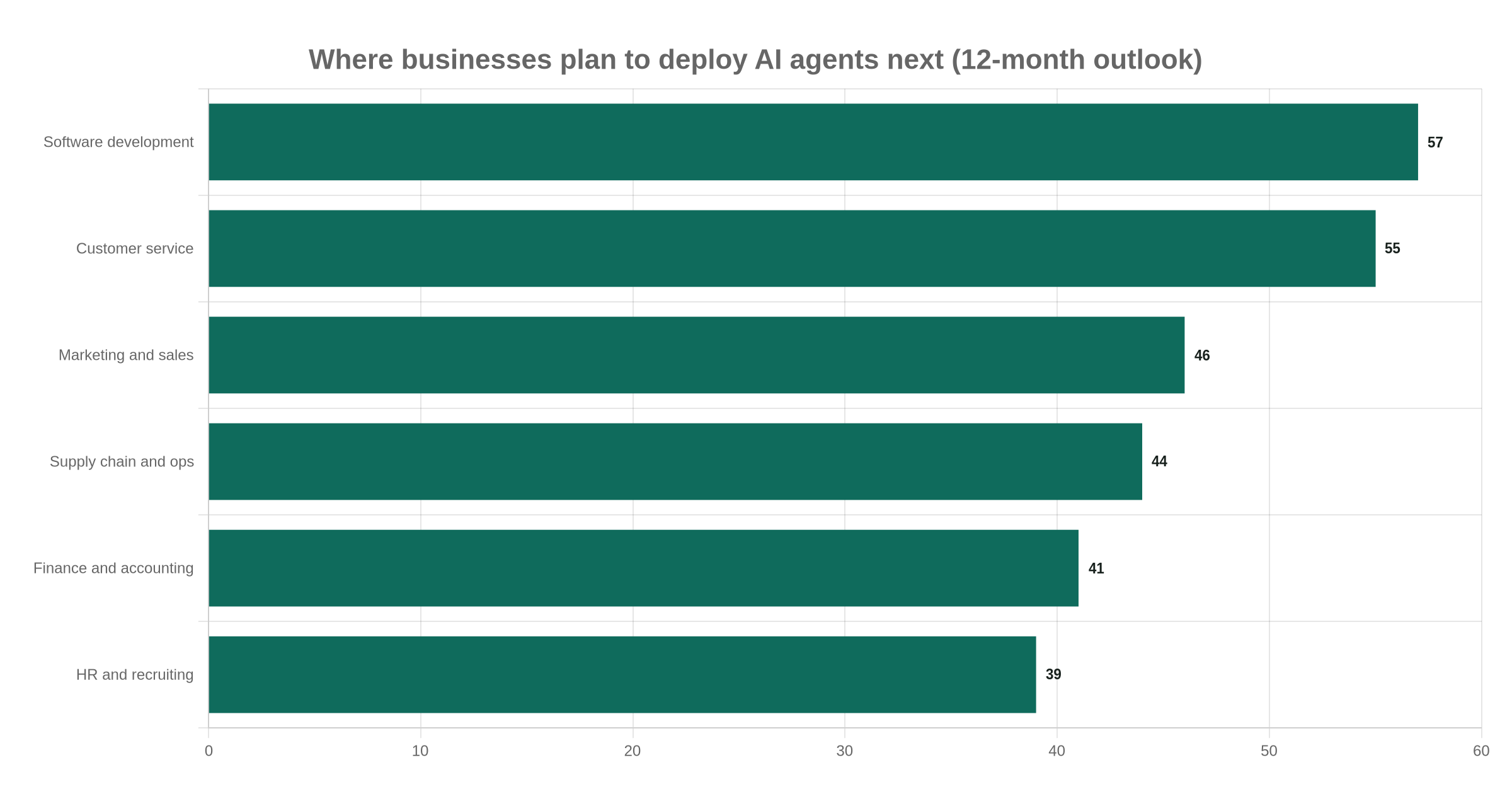
The two customer-facing AI agent examples we see pitched most often in Cambodia are a Telegram support triage agent and a booking confirmation agent, the ones easiest to picture and so the ones most lists stop at. Customer-facing work is also the most common AI agent example worldwide: Claude's 2026 State of AI Agents report finds customer service the second most common deployment target over the next 12 months, named by 55 percent of organizations surveyed, just behind software development at 57 percent (Claude, 2026).
Picture a homeware seller in Phnom Penh's Toul Kork, running a shop page and a Telegram channel at once: that is where the Telegram support triage agent earns its place. A customer asks in Khmer whether an order shipped. A chatbot answers from a script and stops. An agent reads the message, checks the order status in the seller's spreadsheet or light CRM, drafts a reply, and only pings the owner when the order is missing or a refund is requested. TheirStack's company directory alone already lists more than 100 Cambodia-based businesses running a customer channel on Telegram (TheirStack, 2026), and for most of them, it is the first channel a customer tries. Most agents like this one are stitched together with n8n automation, wiring the Telegram channel, the model, and the order spreadsheet or CRM into one flow.
A Kampot homestay owner fielding reservation requests across Telegram, Facebook Messenger and a booking widget, each with its own calendar, needs the second example: a booking confirmation agent. It checks availability across all three, replies with a hold, and writes the confirmed booking back into whichever calendar the owner actually uses, instead of the owner copying the same date into three places by hand every evening.
Payment and finance agents close the books Cambodia businesses still do by hand
A payment or finance agent earns its keep by replacing a repetitive manual match, not by sounding clever. Finance and accounting ranks fifth among planned 12-month AI agent deployments globally, named by 41 percent of organizations (Claude, 2026), and the two examples below are where that work actually shows up for a small Cambodian business.
The first is KHQR and ABA PayWay reconciliation. Bakong, Cambodia's national payment rail, processed 608 million transactions worth 104.81 billion US dollars in 2024, reported via National Bank of Cambodia data (CoinGeek, 2025). A three-outlet coffee chain in Phnom Penh taking a few hundred KHQR payments a day across its branches is matching each one against a till record by hand at closing time. An agent that pulls the bank-side settlement file, matches it line by line against the till export, and only flags what does not match turns a nightly chore into a short exception list. The scoping call that matters most happens before any of that gets built: we ask for at least three months of settlement files and till exports, not one good week, because a reconciliation agent trained on a short, calm window reads an ordinary seasonal swing, a holiday spike, a slow month after Khmer New Year, as an exception, and an owner who gets flooded with false flags in week one stops trusting the agent by week three.
The second is invoice and accounts-receivable follow-up. A garment trading company billing overseas buyers on 30 or 60-day terms often tracks who owes what in a spreadsheet nobody updates daily. An agent reads the accounting export, flags invoices past their due date, drafts a reminder at the right tone for how overdue it is, and escalates to a person only once a second reminder goes unanswered.
Which AI agent examples save the most time on paperwork?
Document-checking is the narrowest, lowest-risk category on this list, and usually the first one worth building, because the agent only has to compare a file against a fixed checklist, not hold a conversation.
The first is a loan or microfinance document intake agent. Before a loan officer reviews a file, an agent checks it against the required document list, a national ID, proof of income, a guarantor letter, and flags exactly what is missing, in Khmer or English, before the file reaches a human. The ILO estimates 57 percent of Cambodian employment sits at high risk of automation, rising to 86 percent within manufacturing wage employment, a 2016 projection still the most-cited figure for Cambodia specifically, not a fresh 2026 estimate (ILO, 2016). It still matters as a reminder that checklist-shaped work like this is exactly the kind an agent absorbs first, not the kind that needs a person doing it by habit.
The second is a customs and export paperwork checker. A garment exporter submitting a certificate of origin has to match the HS code, the declared value and the buyer's name across several documents before filing with Cambodia's customs authority. An agent that cross-checks those fields against the purchase order and flags a mismatch before submission saves the days a rejected filing costs, without ever touching the actual customs system itself. Garment manufacturing already sits at the sharp end of Cambodia's automation exposure, the ILO's 86 percent figure within manufacturing wage employment cited above, which is one more reason to put the checklist work on an agent before it ends up cut altogether rather than assisted.
Sales agents qualify a lead before a rep ever picks up the phone
In Cambodia, AI sales agents show up less as a full "AI sales" platform and more as two narrower jobs: lead qualification and a quote-and-pricing agent. Marketing and sales is still the third most common planned AI agent deployment globally, named by 46 percent of organizations over the next 12 months (Claude, 2026).
A real estate agency in Phnom Penh fielding condo enquiries on Facebook and Telegram gets a mix of serious buyers and window-shoppers, which is exactly the problem lead qualification solves. An agent asks the two or three questions a human agent would ask first, budget range, timeline, whether they have seen the unit, and only routes the qualified leads to a sales rep, instead of a rep spending ten minutes on every enquiry to find out it was not a real one.
A signage or printing company quoting jobs by size, material and quantity faces the second job: a quote and pricing agent that hands a first-pass price range to a customer instantly from a pricing table, while flagging anything outside the standard range for a human to price properly. Picture that company quoting 40 jobs a week, each taking roughly 15 minutes of back-and-forth just to get to a ballpark price: if the agent clears half of those as standard sizes, that is 5 hours a week handed back to the jobs that actually need judgment. The same pattern works for a small web or branding studio fielding "how much for a logo" messages all day: the agent handles the standard package question, and a person only steps in once the brief gets specific.
Where do internal AI agent examples pay off before customers ever notice?
Internal AI agent examples, the ones nobody outside the business ever sees, are often the easiest to justify, because the volume is steady and the failure mode is cheap: worst case, a person double-checks the agent's suggestion before anything reaches a customer or a candidate. That makes internal agents a good place to build confidence in the whole approach before putting one in front of a customer.
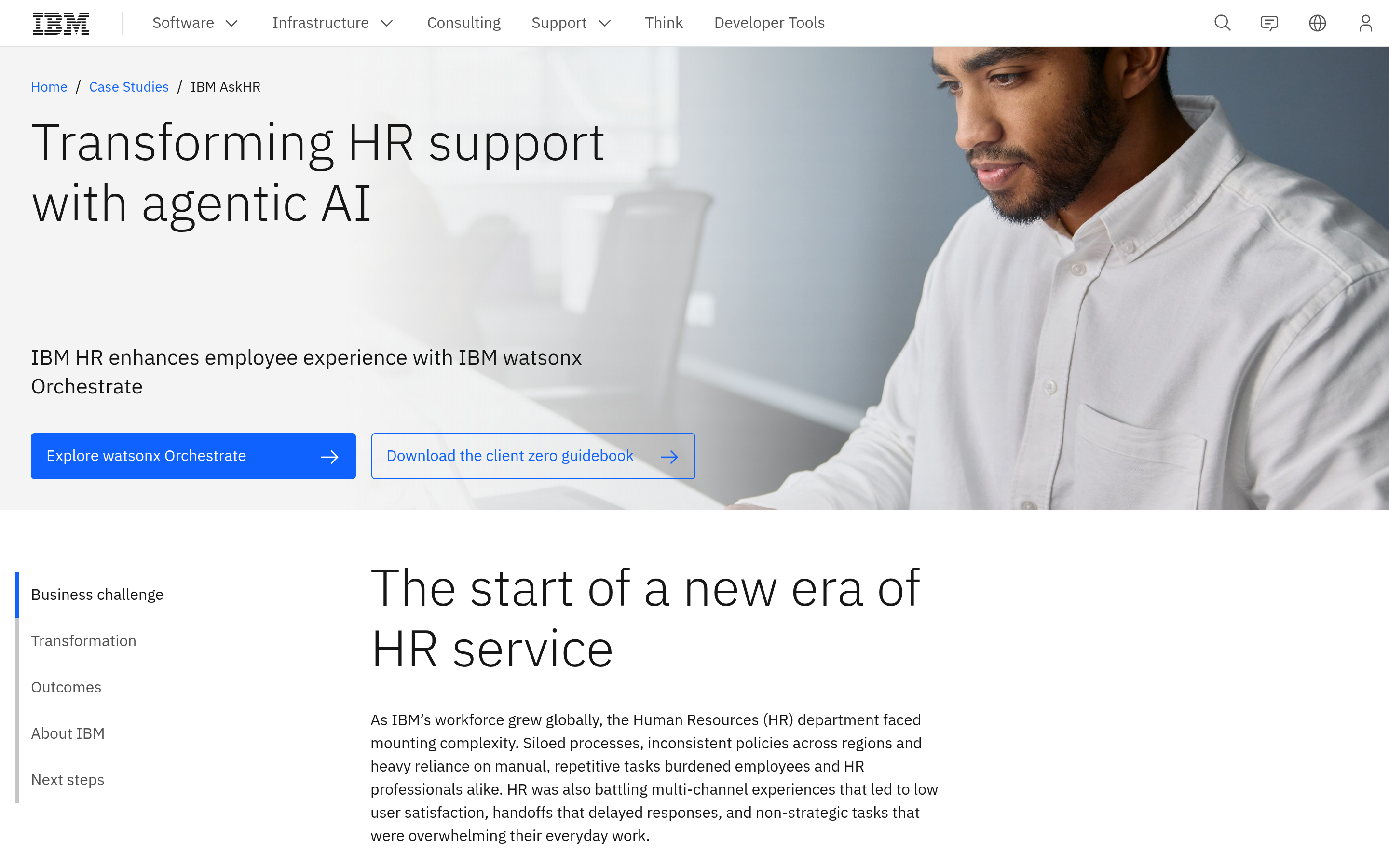
The first is HR resume screening. IBM's own AskHR agent, built on watsonx Orchestrate, reaches a 94 percent containment rate on common HR questions and cut support tickets by 75 percent since 2016, across more than 2.1 million employee conversations a year (IBM, 2025).
That scale is not the point for a Cambodian business; the pattern is. A Cambodian BPO or garment-sector HR office fielding hundreds of applications a month does not need IBM's headcount to benefit from the same approach: an agent that screens applications against the role's minimum requirements, years of experience, language pair, availability, and ranks the rest saves a recruiter from reading every CV from scratch. The recruiter still makes the hiring call; the agent only removes the applications that never had a chance.
The second is inventory reorder. A pharmacy or hardware store chain restocking from a central warehouse can let an agent watch stock levels against a reorder threshold per item and draft the purchase order, instead of a manager eyeballing shelves once a week and reordering too late or too early.
What AI agent example does every generic Cambodia list skip?
Voice is the AI agent example missing from almost every list we checked, global or Cambodia-specific, because it is harder to demo in a blog post than a chat screenshot. A restaurant group or clinic taking phone reservations still answers most calls by hand, even when the request is routine, "is there a table for four at eight," "can I move my appointment." A voice agent answers the call, checks availability the same way a Telegram booking agent would, and only transfers to a person for anything outside a clear script. The honest limit: Khmer-language voice recognition and generation still lag English on most current models, so a voice agent for a Cambodia business works best in English today, with Khmer calls routed to a person until the models catch up. Our AI voice agent piece goes deeper on what that limit means in practice.
The second overlooked example is a marketing content agent. A fashion or e-commerce brand posting daily on TikTok and Facebook spends real staff time drafting captions and ad copy for each post. An agent drafts a first pass from a product description and a content calendar, in the brand's established tone, for a person to edit and approve, not to publish unsupervised.
McKinsey found 23 percent of organizations worldwide already scaling agentic AI in at least one business function (McKinsey, November 2025), but the split runs sharply by size: large enterprises climbed from 27 to 40 percent scaling agents, while organizations under a billion dollars in revenue stayed essentially flat near 22 percent (McKinsey, August 2026). Most Cambodian businesses sit in that second group, which is exactly why this list stays narrow and cheap to prove, not a platform-wide agentic rollout modeled on a billion-dollar enterprise.
That caution is not specific to Cambodia or to small businesses. Gartner predicts that over 40 percent of agentic AI projects will be canceled by the end of 2027, citing escalating costs, unclear business value and inadequate risk controls as its own stated reasons (Gartner, June 2025). Our own read, from scoping builds like the twelve above: the ones that survive are scoped to fix one process, not to prove a platform. The build-tier table below is deliberately the opposite bet: one process, proven cheaply, before anything on this list gets to call itself a platform.
This gap matters because Cambodia is not sitting out the adoption curve waiting for it to close. The country climbed to 118th of 195 countries on the Oxford Insights Government AI Readiness Index 2025, up 27 places from 145th in 2024 (Cambodianess, citing Cambodia's Ministry of Post and Telecommunications, 2026), and one outside estimate puts AI's potential lift to Cambodia's GDP at 3.35 to 6.7 billion US dollars by 2030, a number worth treating as directional, not a budget line (The Better Cambodia, 2026).
Pick the cheapest proof first, not the flashiest demo
Most "AI agent examples" lists rank by category. We would rank them by what a Phnom Penh team can actually ship this month, because that is the question a business owner is really asking, not the one most clients lead with. Whichever example tops a client's wishlist, the question we ask back is the same: what happens if this one is wrong for a week before anyone notices. A customer-facing miss gets reported by the customer within the hour; a reconciliation or document-check miss does not get reported by anyone, which is the real reason it goes first, not because it looks less impressive in a demo.
The table below sorts all twelve examples above against TechFlow's own published Cambodia delivery windows: a narrow AI skill, one automated step bolted onto an existing tool, ships in 24 to 48 hours; a fuller autonomous agent with its own decision logic takes 1 to 4 weeks; sovereign or private-cloud hosting, when data has to stay in-country, adds 4 to 8 weeks on top of either.
| # | AI agent example | Business function | Build tier | Typical delivery |
|---|---|---|---|---|
| 1 | KHQR / PayWay reconciliation | Finance | AI skill | 24 to 48 hours |
| 2 | Customs paperwork checker | Operations | AI skill | 24 to 48 hours |
| 3 | Loan document intake checklist | Finance / compliance | AI skill | 24 to 48 hours |
| 4 | HR resume screening | HR | AI skill | 24 to 48 hours |
| 5 | Inventory reorder | Operations | AI skill | 24 to 48 hours |
| 6 | Marketing content drafting | Marketing | AI skill | 24 to 48 hours |
| 7 | Telegram support triage | Customer service | Autonomous agent | 1 to 4 weeks |
| 8 | Booking confirmation | Customer service | Autonomous agent | 1 to 4 weeks |
| 9 | Invoice / AR follow-up | Finance | Autonomous agent | 1 to 4 weeks |
| 10 | Lead qualification | Sales | Autonomous agent | 1 to 4 weeks |
| 11 | Quote and pricing | Sales | Autonomous agent | 1 to 4 weeks |
| 12 | Voice agent (phone reservations) | Customer service | Autonomous agent | 1 to 4 weeks |
Reading this table in order, not by category, is the point: the top six are a single bolted-on step each, built against a fixed checklist, and that is exactly why they ship in days. The bottom six all make a decision with more than one branch, check status, decide, escalate, which is what a 1 to 4 week build actually buys.
To pick which one to build first:
- List every repetitive task in the business with a clear start, a clear end, and a paper trail, not "customer service" as a whole.
- Cross each one against the table above. Anything in the "AI skill" tier is a cheap, fast proof that the whole approach works before a bigger build gets funded.
- Check the failure cost. A reconciliation mismatch costs money quietly; a bad chatbot reply gets noticed and corrected fast. Build the quiet-failure one first, with a human checking its output, before the customer-facing one goes live unsupervised.
- Ask whether the process already runs on Telegram, KHQR or another channel the business already uses. Build on top of what customers already do, not on a new channel they would have to learn.
- Write down who owns the agent once it is live, the person who checks its output, fixes its mistakes and decides when to trust it with less supervision. An agent with no owner is the one that quietly breaks first.
- Book a free one to two hour process-mapping audit with our AI agents team before committing to a platform subscription for any of the twelve.
What to act on this week:
- Pick one example from the table above, not three.
- If it sits in the "AI skill" tier, scope it as a 24-to-48-hour pilot, not a month-long project.
- Decide who checks the agent's output for the first two weeks. Every example above still needs a human reviewing a sample until it earns trust.
- Read the AI agent cost breakdown before asking three vendors for a quote, so the numbers that come back are comparable.
Prefer to chat? Message our founder directly on Telegram (@maxgrolier), or book a call with the team.
Frequently asked questions
What is an AI agent example, in plain terms?
An AI agent example is a real task where software plans several steps, decides what to do next based on what just happened, and calls a tool, a CRM, a spreadsheet, a messaging app, without a person approving each step. A screenshot of a chatbot answering one question is not an example of this; a system that checks an order, drafts a reply and only escalates the exceptions is.
Which one should a Cambodian business try first?
The narrowest "AI skill" examples are easiest to start with: KHQR or PayWay reconciliation, a customs paperwork checker, or HR resume screening. Each compares something against a fixed checklist, ships in 24 to 48 hours, and fails quietly, a missed match flagged late, rather than publicly, a bad reply a customer sees.
Will this work if my customers write in Khmer?
Text-based examples, Telegram triage, document checks, invoice reminders, work in Khmer today with the right model choice, though Khmer needs more tokens per message than English on most current models. Voice agents are the exception: Khmer speech recognition and generation still lag English, so a Cambodia voice agent works best in English for now, with Khmer calls routed to a person.
How much does a typical AI agent example cost to build in Cambodia?
An "AI skill" example, one bolted-on automated step, ships in 24 to 48 hours. A fuller autonomous agent with its own decision logic takes 1 to 4 weeks. Both start with a free 1 to 2 hour process-mapping audit and a costed action plan within 5 days. If you are comparing vendor quotes, our AI agent development company checklist covers what to ask before signing.
What is the difference between an AI agent example and a chatbot?
A chatbot answers one message and stops; it has no goal beyond the current turn. Every example on this list keeps working after the first reply: it checks a status, decides what to do next, and only hands off to a person when a condition it was told to respect is met.
How long before one of these runs on its own, with no one checking it?
Most agents we would deploy from any of these twelve examples keep a human reviewing a sample of its output for the first few weeks, and a human-in-the-loop boundary on anything involving money or a refund rarely goes away entirely. What changes with time is how much of the routine volume never reaches a person at all.