

A law firm in Cambodia looking at its own website is really asking one question: will a stranger who has never met us trust this enough to send the email that starts a case? That trust has to survive something most business websites never face: a Bar Association rule that limits how a lawyer can talk about their own work in public, enforced since 2012.
This guide sits inside our broader Phnom Penh digital agency coverage and looks at what a law firm website in Cambodia specifically needs: credibility signals a corporate client checks before they call, the compliance line the Bar draws around how far a site can go, and a lead capture flow that works without sounding like solicitation.
What does a law firm's website actually have to prove in Cambodia?
A law firm's website in Cambodia has to prove three things before a single line of marketing copy matters: that the firm is real and registered, that the lawyer a visitor is about to contact is qualified to handle their matter, and that whatever the visitor types into a contact form will stay confidential. A product site sells on price and features. A law firm site sells on the absence of risk, and risk is exactly what a stranger cannot verify from a logo and a stock photo.
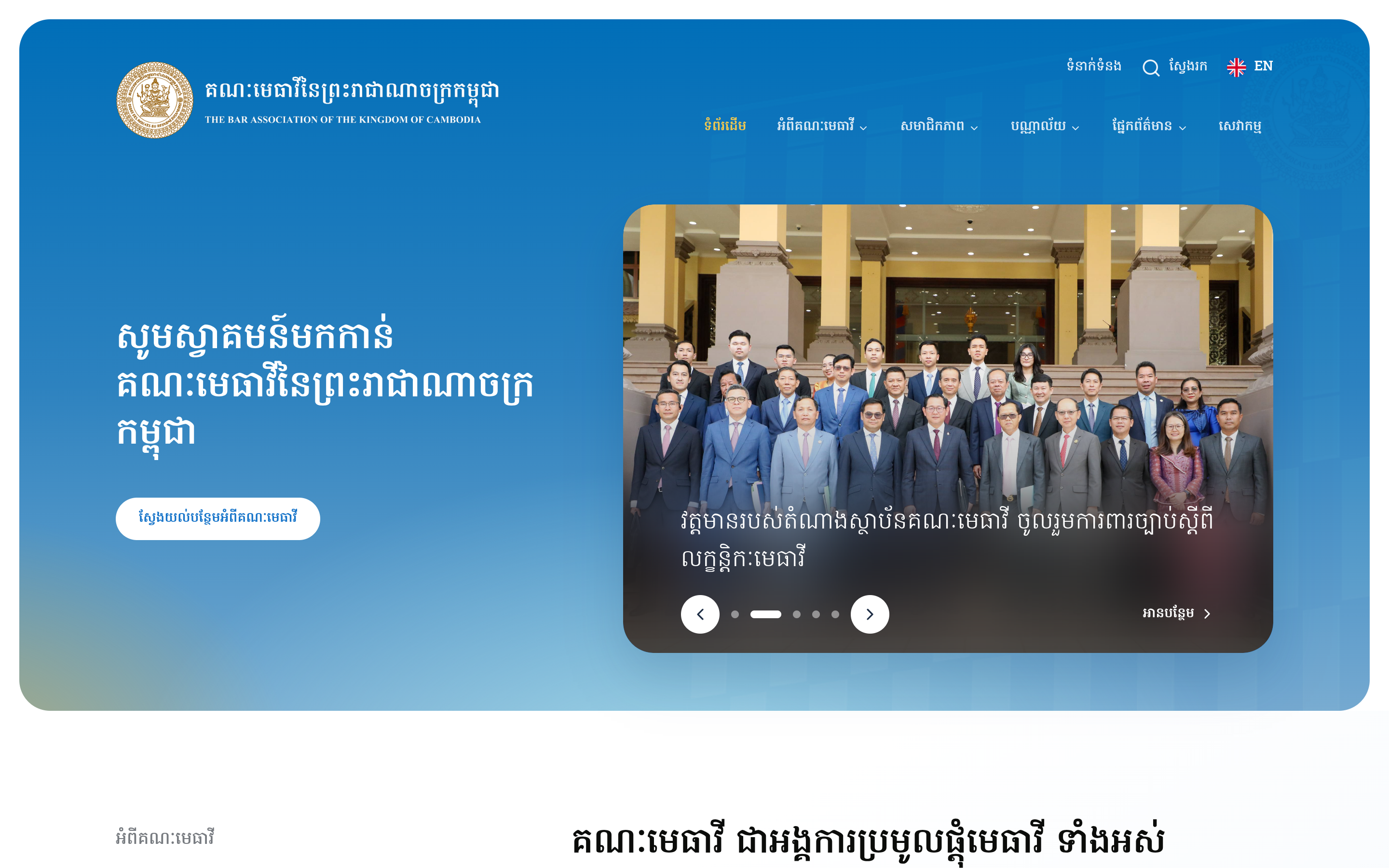
A lawyer website design brief in Cambodia starts from a narrower list of goals than a typical SME site: who is allowed to say what, which credentials actually matter to the reader, and how little the intake form can ask for before it starts to look like solicitation. The market behind that brief has grown fast. The Bar Association of the Kingdom of Cambodia's own site lists 3,297 members and just over 1,100 lawyer offices nationwide, screenshot captured October 2026, up from 1,855 active lawyers the Library of Congress Law Library counted in August 2021, close to double the profession in five years.
Picture a mid-sized Phnom Penh firm handling labor disputes for garment-sector clients. Its current site is a single page built in 2019: a logo, a phone number, a paragraph in passive voice. A corporate HR director researching the firm before a call has no way to tell, from that page, whether the firm has handled a case like theirs before. That gap, not the logo or the color palette, is what a law firm website redesign actually has to close.
Cambodia's legal market has outgrown what most firm websites show
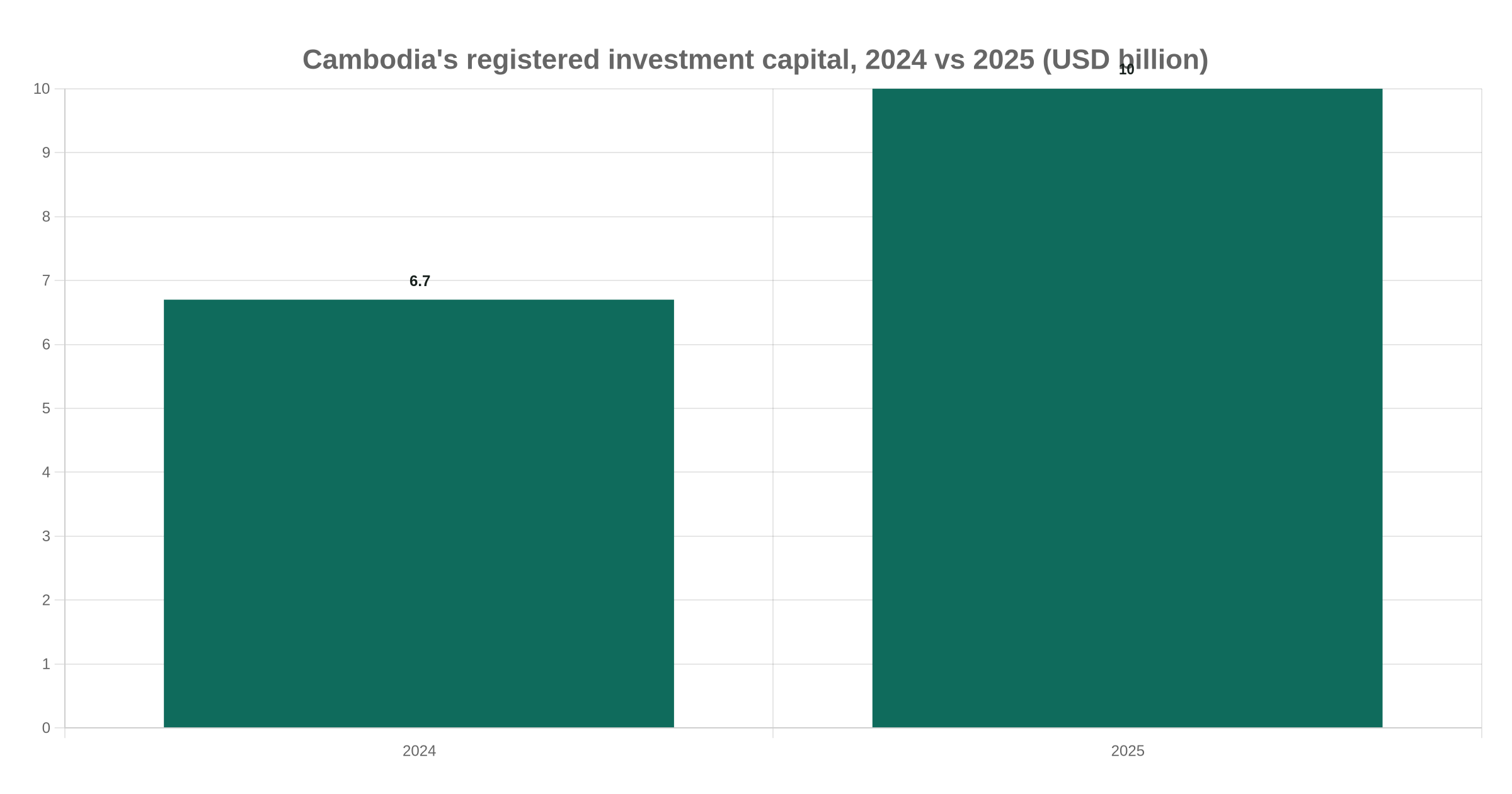
Cambodia registered 630 new investment projects in 2025, worth close to USD 10 billion in total capital, roughly 50 percent more than in 2024, according to the Chambers "Investing In 2026: Cambodia" guide. Foreign direct investment alone reached USD 5 billion, up 18 percent year on year, with manufacturing investment growing fastest of all. Every one of those projects needs a lawyer at some point: for licensing, for a lease, for a labor contract, for a dispute nobody saw coming.
The firms built to handle that volume are easy to name and mostly international. DFDL, founded in Cambodia in 1995, holds a Band 1 ranking from the Chambers Asia-Pacific Guide 2026 for General Business Law. Tilleke & Gibbins covers intellectual property and regulatory compliance. Sciaroni & Associates, active since the early 1990s, built its name on investment licensing and government relations. On the domestic side, Bun & Associates is described by legal directories as one of Cambodia's most established firms, while SokLegal has built a newer practice specifically around startups and fintech, the exact client type most likely to search for a lawyer online rather than through a referral.
We think a domestic firm competing for Cambodia's FDI-driven legal work loses more to an outdated website than to an international firm's name recognition, because a foreign investor doing diligence from abroad has no referral network to fall back on and will judge the firm by what Google and the site itself show them.
Why does Article 17 make most Cambodia law firm websites look the same?
Article 17 of the Bar Association of the Kingdom of Cambodia's Code of Ethics, adopted in 2012, is why most law firm websites here read like a photocopy of each other: a logo, a practice area list, a one-paragraph bio, nothing more. The article restricts how a lawyer can speak publicly about their own work, permitting public statements only within strict compliance with the duties of the legal profession. Firms read that broadly and default to saying as little as possible.
That caution is not obviously what the rule requires. When the article was introduced, Emerlynne Gil, then the International Commission of Jurists' International Legal Adviser for Southeast Asia, said in 2013:
"The language of the new Article 17 is an improvement over the old Code, but it is ambiguous and raises fears that lawyers will not be able to exercise their right to express their opinions freely."
Gil argued at the time for more public legal discussion, not less, calling it the better way to strengthen the rule of law. More than a decade on, most Cambodia law firm websites have taken the opposite path.
A bio-only page and a page that states a firm's real specialties, named deal types and plain-language process are both compliant with Article 17 as written. The difference is nerve, not law. We do not think Article 17 forces a law firm website into a bare bio page, since stating "we structured licensing for three garment manufacturers this year" is a factual professional statement about completed work, not solicitation of a specific new client. The ambiguity Gil flagged in 2013 still leaves firms more room than most of them use.
What did building Mandil Avocats' site teach us about a law firm brief?
Building Mandil Avocats' site taught us that a law firm brief starts from compliance and credibility, not from a template, because registration, bar rules and client confidentiality shape the brief before a single wireframe exists. Mandil Avocats is a law firm specialized in legal support for digital-sector players; the project ran through our standard scoping, branding, UX/UI and development process, with the specifics of a legal practice built into every step.
Research and strategy came first: what the firm could credibly claim given Article 17, which practice areas to lead with, and how a digital-sector client actually searches for legal help. Branding and visual identity followed, aimed at a register a corporate counsel would read as serious rather than a Phnom Penh startup-branding playbook. The UX/UI mockups prioritized a practice-area structure over a generic "our services" grid, since a visitor usually arrives already knowing roughly what kind of lawyer they need. Development ran on Webflow, with a technical audit through Screaming Frog and 301 redirects carried over from the firm's previous site, preserving its existing search visibility through the move.
That last detail matters more than it sounds. A firm's site is often the only public record of how long it has operated; losing that history in a redesign resets a credibility signal that took years to build.
How does a Cambodia law firm turn a website visit into a scoped call without crossing the solicitation line?
A Cambodia law firm turns a website visit into a scoped call by asking for less, not more, on the first form: a name, an email or Telegram handle, and a one-line description of the matter, with case detail saved for a private conversation instead of a public web form. That structure respects Article 17's limits while still converting, because it reads as an intake step rather than a promise of a result.
The arithmetic behind that choice is simple. A first form that asks for case history, prior counsel and supporting documents takes a visitor 15 to 20 minutes to complete on a phone, our estimate from timing the equivalent fields on comparable SME intake forms we have built. A form asking only for a name, a contact handle and a one-line matter description takes under 2 minutes, a reduction of roughly 85 to 90 percent in the time between landing on the page and sending it. Every minute added to that first form is a minute a visitor can close the tab and call a different firm instead, and a referral read on a phone is the easiest tab in the world to close.
Picture a manufacturing investor's in-house counsel in Singapore, scoping local counsel for a new Phnom Penh factory lease with two firms' websites open in separate tabs. One contact form asks for case background, prior counsel and a document upload before it will even submit. The other asks for a name, a Telegram handle and one line describing the lease. The counsel fills in the second form and closes the first tab, not because the first firm would handle the lease any worse, but because the first form already cost more time than the question warranted.
Mobile matters more here than on most SME sites. Cambodia had 12.0 million internet users as of October 2025, a 67.3 percent penetration rate, and 14.0 million social media user identities, 77.9 percent of the population, according to DataReportal's Digital 2026: Cambodia report. A corporate counsel abroad may read the site on a laptop, but the referral itself, a WhatsApp or Telegram message from a colleague, usually starts on a phone.
The intake form carries a compliance question that will not stay theoretical much longer. Cambodia's draft Law on Personal Data Protection, unveiled in July 2025 and still in validation workshops as of August 2026 according to the Ministry of Post and Telecommunications, would require breach notification within 72 hours and, for any foreign entity processing a Cambodian resident's data, a local representative and ministry permission for cross-border transfer. A law firm's intake form is exactly the kind of personal-data collection the draft law targets, since it routinely gathers a visitor's name, contact details and the subject of a legal problem before any retainer exists.
Other sector sites we have built face a related problem from the opposite direction. A real estate website has to answer a buyer inquiry fast because speed is the entire pitch, while a hotel website optimizes a booking engine for conversion in a single session. A law firm's funnel is slower by design: the form only has to earn a reply, not a signature, and rushing that step reads as the solicitation the Bar rule is there to prevent.
The open question every Cambodia law firm website still has to answer
Cambodia's draft Law on Personal Data Protection has not passed as of this writing, and nobody can say yet whether the version that finally does will treat a law firm's intake form the way it treats a bank's. That is the open question we think every firm should plan around now rather than wait out: build the breach-notification and cross-border-transfer logic into the form today, and a passed law changes a setting, not a rebuild.
Our recommendation follows from everything above: treat the website as a compliance document first and a brochure second. That is the brief behind our design services, run by a Phnom Penh-based team that has already built one law firm's site around these same constraints. Our project portfolio shows how we run branding, UX/UI and development as one process rather than three handoffs. To scope a law firm website project, request a scoping call: 30 minutes, no obligation.
Prefer to chat? Message our founder directly on Telegram (@maxgrolier), or book a call with the team.