Good hotel website design in Cambodia means a site with its own booking engine, real photography, a page loading under two seconds on a mid-range phone, and structured data that lets Google and AI assistants show it as a bookable result, not a brochure. Most hotel websites we can find for this market skip at least two of those four.
This article covers what a hotel, guesthouse or resort website needs to do in 2026, why a templated site quietly loses bookings, and what a properly built one costs.
What does good hotel website design actually need to do in Cambodia?
A hotel website in Cambodia needs to do four things at once: let a guest check dates and pay without leaving the page, load fast over hotel or roaming data, show the property's actual rooms and grounds, and describe the hotel in a format Google and AI tools can read as a bookable listing. Most sites competing for this search do one or two of those well and skip the rest.
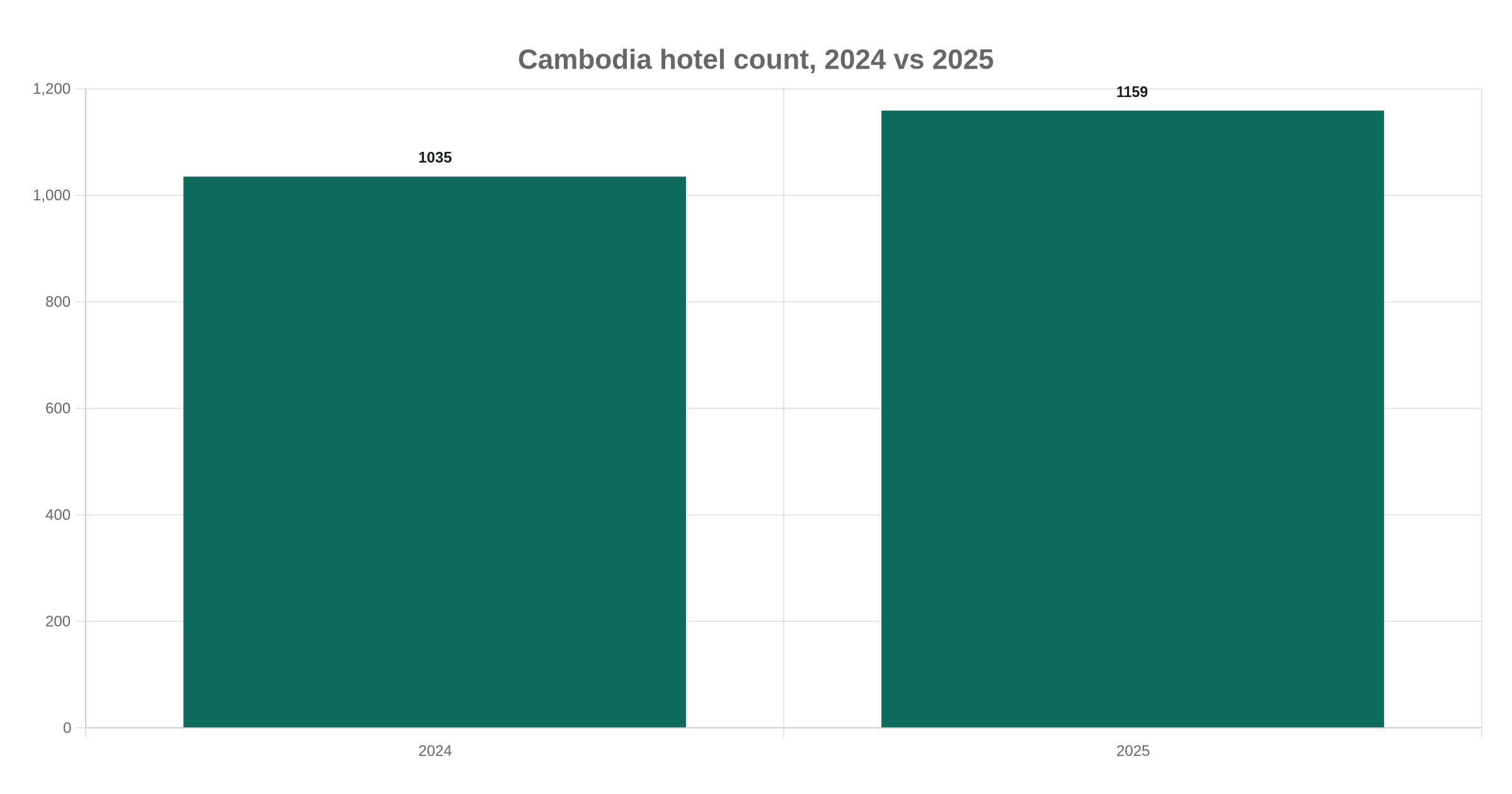
Cambodia had 1,159 hotels in 2025, up from 1,035 the year before, with 95,588 hotel and guesthouse rooms nationwide (Ministry of Tourism 2025 indicators, cited by Khmer Times, 2026). International arrivals reached 5.57 million in 2025, down 16.9 percent year on year, while domestic trips climbed to 25.16 million, up 11.7 percent, over the same period. A market with more properties chasing a smaller pool of international guests and a growing domestic one is where website design stops being decoration and starts deciding bookings.
How many hotels in Cambodia are competing for the same search?
Every one of those 1,159 hotels, plus every guesthouse and resort, is competing for the same shrinking pool of international arrivals and a growing, more price-sensitive domestic market. Our coverage of the tourism digital push tracks the same shift, the one behind our broader Phnom Penh agency work: design budgets now follow proof of conversion, not brand polish, because arrivals are down. A hotel in Siem Reap and one in Sihanoukville are not really competing with each other for a Phnom Penh traveller's search, but both compete against Booking.com and Agoda's own listing pages, which rank first for almost every generic hotel search in the country. That changes what a hotel website has to win: not the click that finds the destination, since OTAs already own that, but the click that decides whether to book direct or hand an OTA a commission for the reservation.
Why does a templated hotel website in Cambodia lose bookings a well-designed one would keep?
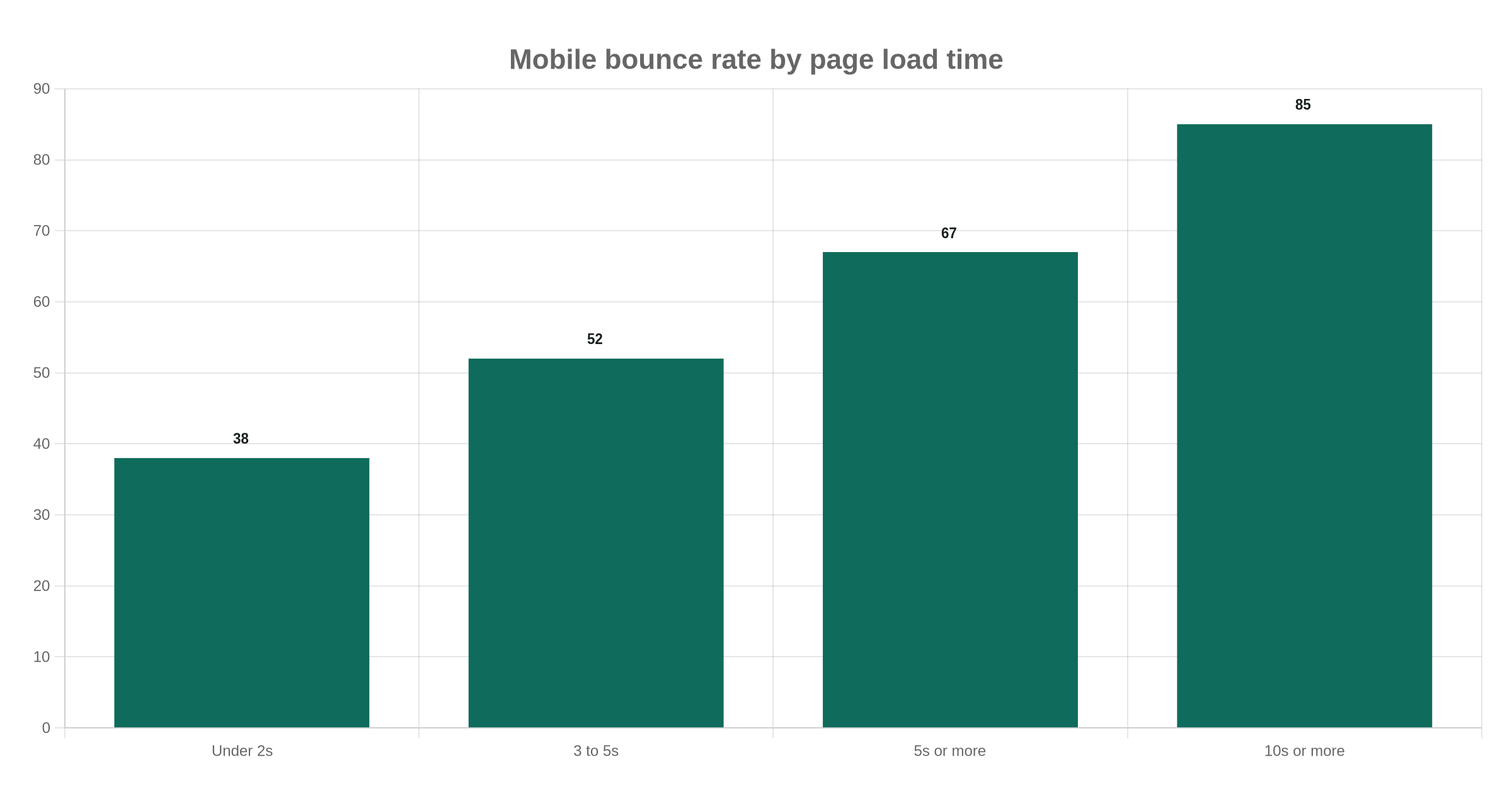
A templated hotel website loses bookings mainly on load speed and trust, not on missing features. Mobile visitors abandon a page at a 52 percent rate once load time lands in the 3-to-5 second bucket, climbing past 67 percent past five seconds (Digital Applied, 2026, aggregating Google, HTTP Archive and CrUX data). A gallery of six unoptimised, full-resolution images is the most common way a Cambodian hotel site crosses that line on hotel wifi.
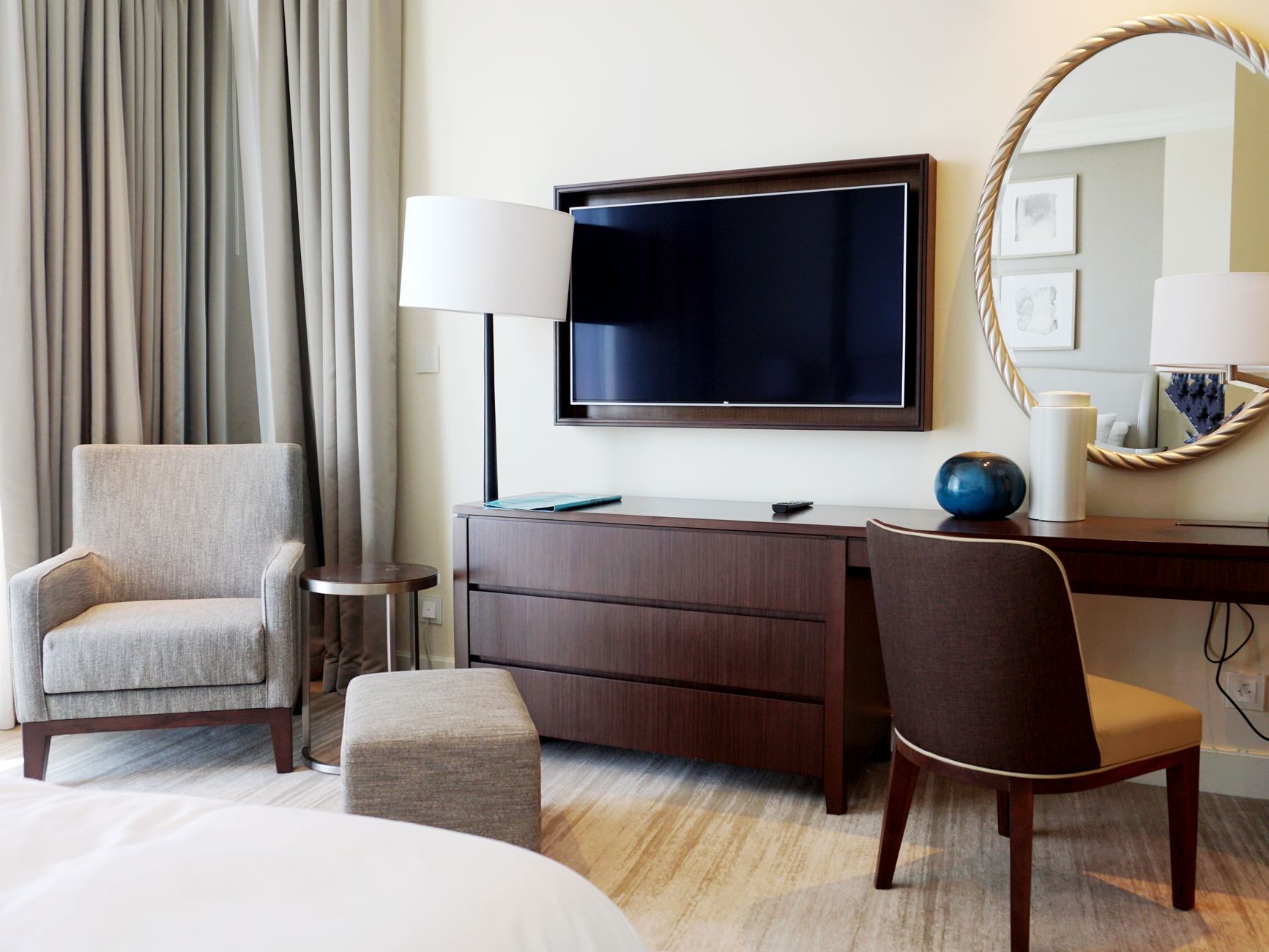
Trust is the second failure point. A 14-room boutique property near Angkor Wat with a gallery of stock photography of pools and breakfast spreads is asking a guest to book a room they have never seen. Swap that for a same-day phone shoot of the real rooms and courtyard, done in an afternoon for the cost of a staff member's time, and the guest sees the room they are paying for instead of a generic tropical mood board. Real photography does more to close a booking than any copy about "authentic hospitality".
We would not spend a hotel's design budget on a cinematic hero video before fixing page load speed on a mid-range Android phone over hotel wifi, because a beautiful site nobody's connection finishes loading converts at zero.
Inside a booking engine that actually converts
A booking engine that converts lets a guest pick dates, see a real price, and pay, all on the hotel's own domain, in three taps or fewer. Most Cambodian hotel sites we reviewed do one of two things instead: embed an iframe pointing at an OTA's own widget, quietly reintroducing the commission the site was meant to avoid, or replace booking with a contact form answered on the next shift.
Take a 60-room business hotel in Phnom Penh serving corporate travellers, running at a typical 20 to 30 corporate bookings a month through its website. A generic contact form means every one of those waits for a staff reply during office hours, exactly when a competing hotel with a live booking engine and a visible corporate-rate code confirms the same booking in under a minute. We build this integration on Webflow, connected by API to the property's booking engine or channel manager, so the guest never leaves the hotel's own site. The failure mode to design against is sync lag: a channel manager updating availability on a nightly batch instead of in real time can leave two guests holding a confirmation for the same room, worse for trust than the contact form it replaced.
| Templated site | Custom-built site with a real booking engine | |
|---|---|---|
| Booking flow | Contact form or OTA iframe | Dates, price and payment on the hotel's own domain |
| Typical mobile load time | 4 to 8 seconds, heavy unoptimised images | Under 2 seconds, compressed and lazy-loaded images |
| Google Hotel Ads eligible | Rarely, no structured data | Yes, with LodgingBusiness and HotelRoom schema |
| Photography | Stock or a handful of old phone photos | The property's own rooms, current and lit properly |
| Multilingual and local payment | English only, no KHQR | English plus Khmer where relevant, KHQR at checkout |
| Typical cost to build | Low, but recurring in lost direct bookings | Fixed cost, paid back by commission recovered on shifted bookings (see the Sihanoukville example below) |
Does rate parity stop a hotel's own website from winning against Booking.com?
Rate parity does not stop a hotel's own website from winning against Booking.com on the bookings that matter most, it only stops it from winning on price. Rate parity is the requirement, standard in most OTA agreements, that a hotel show the same publicly listed rate on its own site as on the OTA (SiteMinder, 2026). The EU's Digital Markets Act designated Booking.com a gatekeeper and banned both the wide and narrow versions of this clause EU-wide from November 2024 (European Commission, Digital Markets Act factsheet, 2026); Cambodian OTA contracts fall outside that ruling, and we found no published data on how many local properties still operate under full parity.
That still leaves the commission on the table. OTA channels in Southeast Asia routinely take 18 to 30 percent of room revenue, and the region's hotels still send 65 to 70 percent of bookings through them (Hospitality Net, 2026), while the direct website channel already holds a 41 percent share of hotel bookings across Asia, ahead of Booking.com and every other OTA individually (D-EDGE 2024 Hotel Distribution Report, cited by creativeformore.com, 2026).
Consider a 25-room beach resort in Sihanoukville or Kep at a 50 USD average nightly rate, selling 300 room-nights a month: moving 60 of those room-nights from an OTA listing to the resort's own booking engine shifts 3,000 USD a month in revenue, and keeps 18 to 30 percent of that as avoided commission, 540 to 900 USD a month, so 6,480 to 10,800 USD a year, close to or above what the website cost to build. This is illustrative, not audited for any specific property, but it shows why parity on price does not mean parity on what a booking earns.
We think a hotel that routes its "Book Now" button to an OTA's own widget instead of a booking engine on its own domain is designing its website to convert for someone else's business, not its own.
How does a hotel website show up in Google Hotel Ads and AI answers?
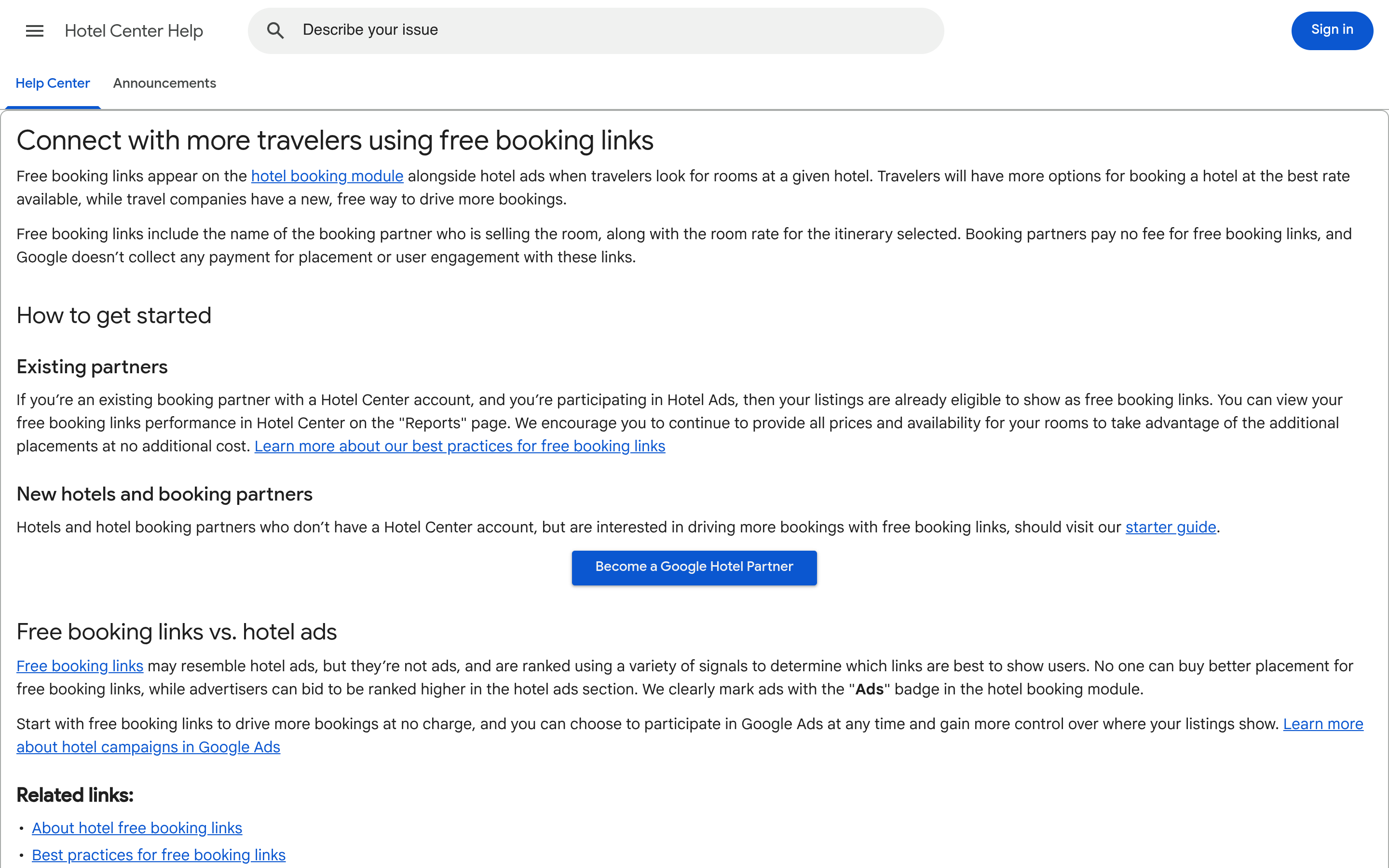
A hotel website shows up in Google Hotel Ads as a free booking link, at no cost per click, once the property has a Hotel Center account and keeps prices and availability current (Google Hotel Center, 2026). Getting listed there, and cited correctly by AI assistants summarising "best hotels in Siem Reap" prompts, depends on the same thing: structured data describing the property as a bookable entity, not a page of prose. That means marking up the site with schema.org's LodgingBusiness type for the property and HotelRoom with an Offer per room type, each carrying price, currency and availability (schema.org). Without it, a site can still rank in ordinary Google search but stays invisible to hotel-specific booking surfaces and to an AI assistant confirming a price before naming the property.
Local payment belongs in the same technical layer, not bolted on after launch. KHQR, the National Bank of Cambodia's QR payment standard, was accepted by 4.5 million merchants nationwide as of the NBC's 2024 annual report (National Bank of Cambodia, cited by Ledger Insights, 2026), so KHQR at checkout removes real friction. Cambodia counted 12.0 million internet users as of late 2025, 67.3 percent of the population (DataReportal, Digital 2026 Cambodia), mostly on mobile, which is why speed and KHQR checkout matter more than a desktop-first review would suggest.
What TechFlow builds, and what it costs to get there
A hotel, guesthouse or resort project runs through the same six-step process we use for every build: audit, technical recommendations, design and prototype, sprint-based development, testing and go-live, then post-launch follow-up. A showcase site with a connected booking engine typically takes 3 to 6 weeks, depending on how ready the photography and rate structure are at kickoff. We deliver from Phnom Penh, ICT (UTC+7).
We would not build this full scope for every guesthouse. A two-room homestay gets more value from a clean Google Business Profile, a fast Telegram reply and a KHQR payment link than a booking engine it lacks the volume to justify. The build earns its cost once room inventory and OTA exposure are high enough that shifting a fifth of bookings direct pays for the site within a year or two.
If your current site is a template with no real booking flow, or bookings run entirely through OTAs and a Facebook inbox, book a call with our design team. See examples on our projects page; our AI for hotels coverage goes deeper on what to automate once booking is fixed, and nonprofits can read our NGO website design coverage for the same discipline on a donor-facing site. Otherwise, get in touch and we will scope your project, not a generic package.
Prefer to chat? Message our founder directly on Telegram (@maxgrolier), or book a call with the team.
Frequently asked questions
How much does a hotel website cost to build in Cambodia?
There is no single published price since scope varies with room count and booking-engine integration, but a showcase site typically fits the 3 to 6 week build window we quote for comparable projects, priced on a scoped quote rather than a fixed package.
Do we still need Booking.com and Agoda if we build our own website?
Yes. OTAs still bring international discovery a new website cannot replace on its own, particularly for first-time visitors to Cambodia: the direct channel holds only 41 percent of hotel bookings across Asia (D-EDGE 2024 Hotel Distribution Report), so OTAs still carry the majority. A direct-booking website adds a commission-free channel for guests who already know the property; it does not replace the discovery OTAs provide.
Can guests pay for a room through our own website using KHQR?
Yes. KHQR, the National Bank of Cambodia's QR payment standard, can be built into a booking engine's checkout for deposits or full payment, and the Bakong Tourist App extends the same standard to visitors without a Cambodian bank account.
Does a hotel website need a Khmer-language version?
For most Cambodian hospitality businesses, yes, at least for booking terms and contact details, since staff, suppliers and a share of domestic guests read Khmer as their first language.