

.svg)

A Real Estate Website in Cambodia Should Win on Speed, Not Listings
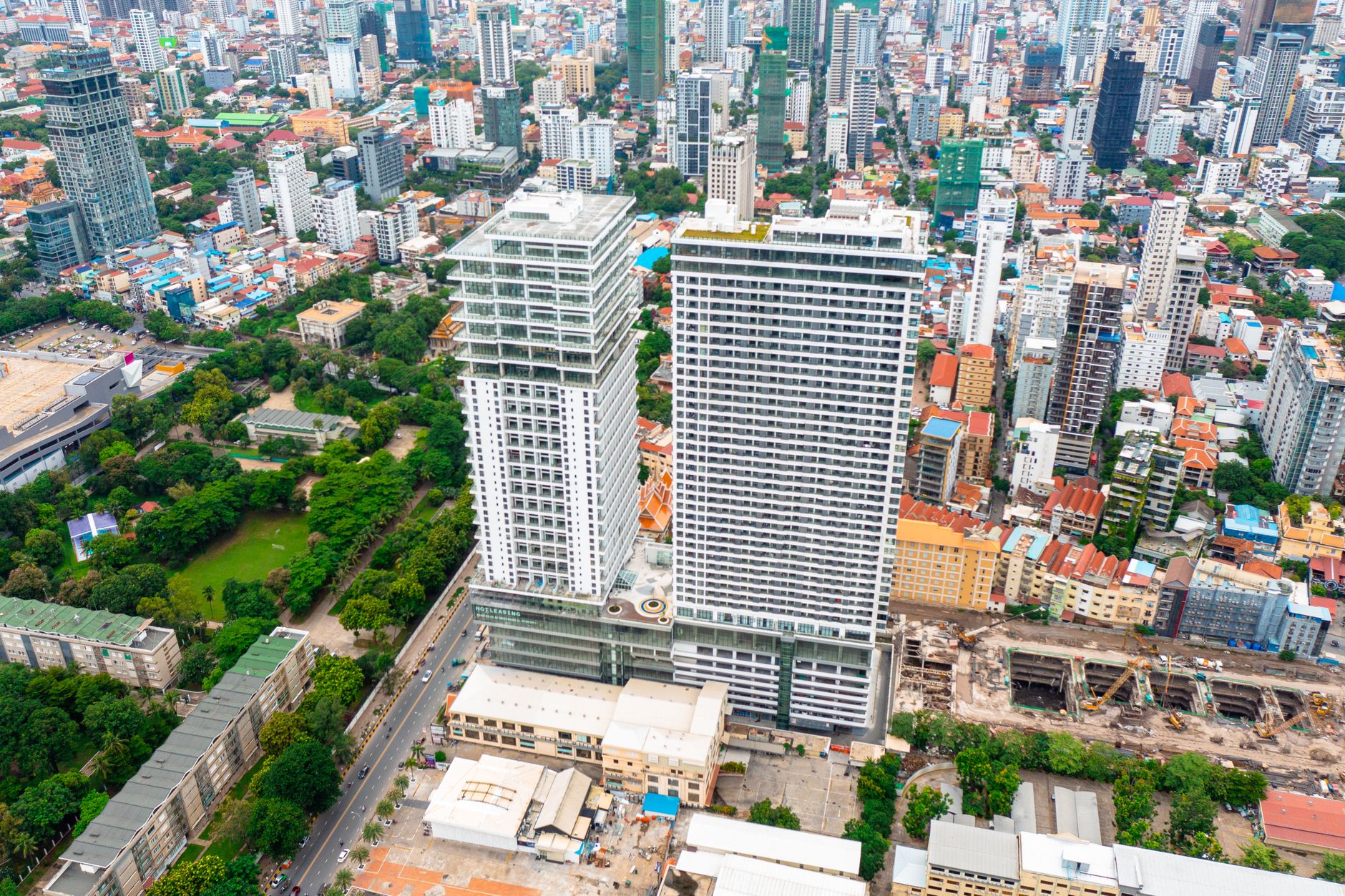
A real estate website in Cambodia rarely needs to out-list Realestate.com.kh, Cambodia's largest property portal with more than 47,000 active listings (Realestate.com.kh, fetched September 2026). Of Cambodia's 17.9 million people, 12.0 million are already online (67.3 percent internet penetration, DataReportal Digital 2026 Cambodia), and most of them find a project through a portal listing, a Facebook ad, or a friend's referral, not through the project's own search ranking. The website's job is to convert that buyer faster than their next open tab. With Phnom Penh's condominium stock now at 63,334 completed units and still growing (Knight Frank H2 2025 Cambodia Real Estate Highlights), a project's own site competes on trust and reply speed, not on inventory size.
This guide covers what actually moves a Cambodian real estate or condo developer's website from a digital brochure to a lead-closing tool: the features that matter, how fast the site should respond, what foreign buyers expect to see before they inquire, and what the build costs and takes in 2026.
Why shouldn't a developer's website try to out-list Realestate.com.kh?
A developer's website should not try to out-list Realestate.com.kh, because the portal already won that race. Realestate.com.kh alone carries more than 47,000 active listings, and FazWaz-KH lists a further 10,811 condos and houses (FazWaz-KH, September 2026). No single project site will out-rank that breadth for a broad term like "condo for sale Phnom Penh," and it should not try. The portal's job is discovery: it is where a buyer with no project in mind yet starts browsing. A project's own website has a different job: it is where a buyer who already has a project in mind decides whether to trust it enough to send a message. That decision matters more as absorption improves: launch sales rates climbed from 6 percent in H1 2023 to 29 percent in early 2024, yet the average project still runs about 15 percent vacancy (IPS Cambodia data, via Bamboo Routes, Knight Frank H2 2025), which is exactly why converting the leads a portal or an ad already sends matters more than listing more units.
As our guide to choosing a Phnom Penh digital agency argues, the channel that finds a visitor and the page that converts them are rarely the same asset. Treating a project website as a mini search engine wastes budget that should instead go into the handful of pages a serious buyer actually reads: the unit finder, the payment plan, and the contact button.
What do Cambodia's real estate search results actually reward?
Cambodia's real estate search results reward property portals almost exclusively, which means a project website should stop chasing generic search traffic and focus on converting the buyer who is already close to deciding. We checked the Google Cambodia results for "real estate website cambodia" and "property website cambodia" in September 2026 (DataForSEO SERP data, Cambodia, English).
| Query | What ranks in the top 10 | Web development content present? |
|---|---|---|
| real estate website cambodia | Property portals and agencies (Realestate.com.kh, IPS Cambodia, Harbor Property, CENTURY 21 Cambodia) | No |
| property website cambodia | Property portals and agencies (Realestate.com.kh, PropNex Cambodia, ARC, Lux Realty) | No |
That is the opposite of the crowded "how to build a website" niche in most Western markets: the topic is wide open for a genuinely useful build guide, but it also confirms that nobody searches "real estate website cambodia" while holding a checkbook for a specific unit. That buyer types the project's name, or clicks a link someone sent them. The practical takeaway is that SEO budget on this exact topic buys attention from other web developers and researchers, not from condo buyers; budget spent making the destination page convert once a lead lands on it, from a portal listing, a referral, or paid social, buys the sale.
The features that actually sell a Cambodian condo online
A photo gallery and a PDF brochure are not enough. The features that turn a visit into a message are the ones that answer a buyer's next question without making them ask it: a live availability grid showing which units on which floor are still open, updated as reservations happen; a 360-degree virtual tour of a finished or model unit; downloadable floor plans and a bilingual (English and Khmer) brochure; a payment-plan or ROI calculator that turns a price per square meter into a monthly figure; and a one-tap WhatsApp or Telegram button next to every unit, not buried in a footer.
We would not build a static brochure site for a condo launch; the live availability grid is the first feature we scope, not the last. A gallery of renders answers "what does it look like." A grid that shows which units are still available answers the question that actually triggers a message: "is my unit still there." Picture a 40-unit boutique launch in Boeung Keng Kang: that grid alone could replace a full-time sales coordinator's morning phone round.
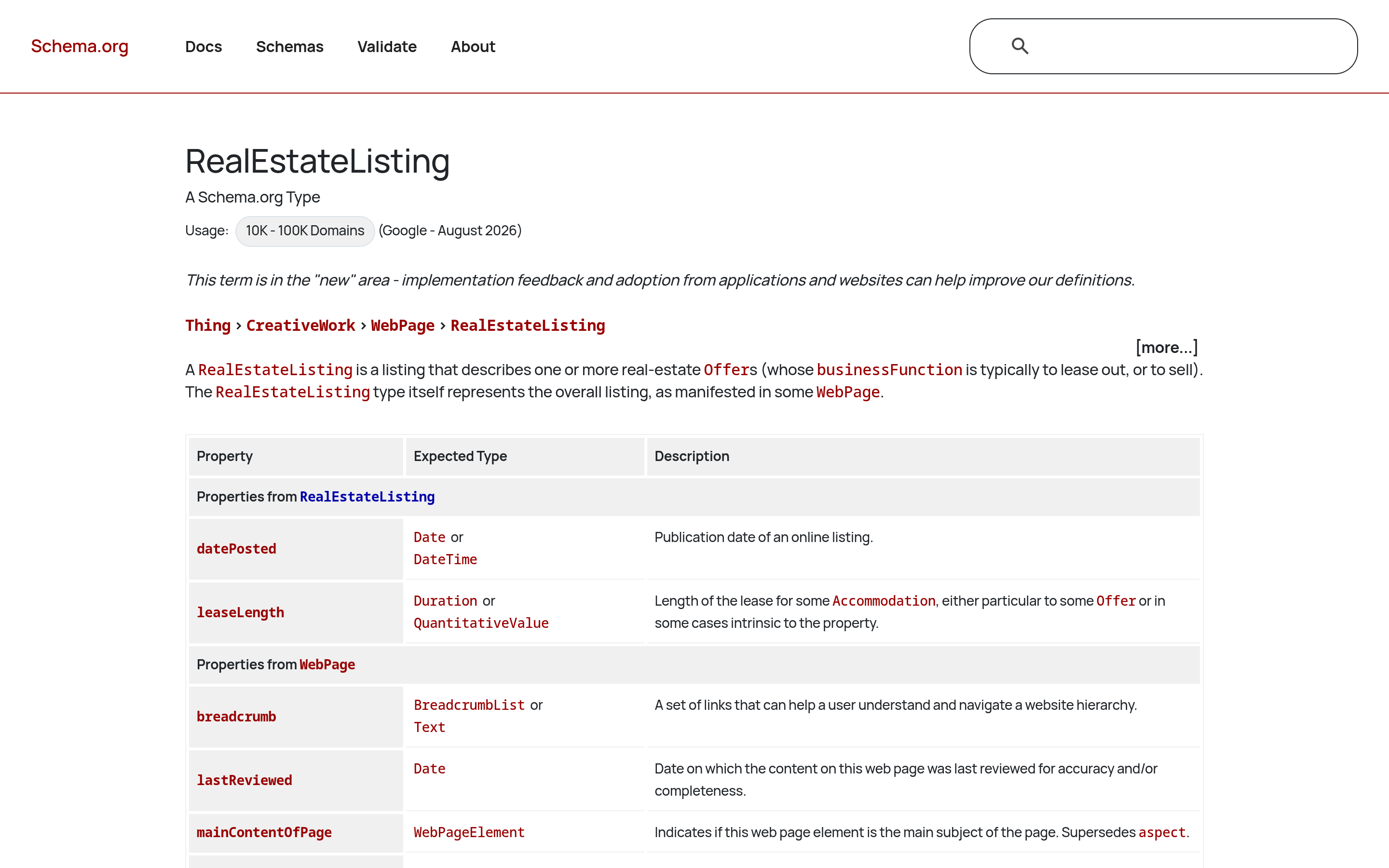
Behind the visible features, the listing pages themselves should carry RealEstateListing structured data (schema.org's vocabulary for this) so price, floor area, and availability can surface directly in search results and shared previews, the same way a hotel's booking page carries LodgingBusiness markup.
How fast should a real estate website in Cambodia answer an inquiry?
A real estate website in Cambodia should answer an inquiry within minutes, not hours. Responding within five minutes makes an agent 21 times more likely to convert that lead, and even with fast replies, average internet lead conversion sits at only 2 to 3 percent of inquiries closing (The Close, 2026, a trade-press compilation of industry benchmarks, not Cambodia-specific data but directionally reliable).
In a market where WhatsApp dominates communication with international buyers while Telegram and Facebook Messenger dominate domestically (IPS Cambodia, 2026), a contact form that lands in an unmonitored inbox is worse than no form at all. We always wire the first reply to Telegram or WhatsApp before we wire it to email, since email is where Cambodian real estate leads go quiet. Offering a KHQR payment option alongside bank transfer for the reservation deposit helps too: an estimated 4.5 million merchants nationwide can already accept KHQR (National Bank of Cambodia 2024 annual report, via LedgerInsights).
What legal details do foreign buyers expect to see before they inquire?
Foreign buyers expect to see, on the property page itself, whether a unit falls inside the building's foreign-ownership quota and what kind of title it carries, because Cambodia's 2010 Foreign Ownership Property Law caps foreign ownership of any co-owned building's private units at 70 percent, excludes ground and basement floors entirely, and reserves the rest for Cambodian nationals (IPS Cambodia; Emerhub, 2026).
| Foreign buyers | Cambodian nationals | |
|---|---|---|
| Condo unit, first floor and above | Up to 70% of a building's private units | At least 30% guaranteed |
| Ground floor or basement unit | Not permitted | Permitted |
| Landed house or land title | Not permitted (constitutional restriction) | Permitted |
| Title type available | Strata title | Strata, hard, or soft title |
A property page that states plainly which quota a unit falls under, and whether the building's strata titles are already registered rather than only promised, answers the question a cautious foreign buyer would otherwise have to ask an agent by message before ever picking up the phone. Domestic buyers weigh a different distinction: soft title is widespread, covering an estimated 70 percent of properties in major cities and up to 80 percent in rural areas, recognized only locally, against hard title, registered nationally with the Ministry of Land Management, Urban Planning and Construction and strongest in a dispute (Realestate.com.kh guide, 2026). A site that names the title type per unit, in plain language, saves that question too.
What does a real estate website cost and how long does it take in Cambodia?
A real estate website in Cambodia ranges from a 3 to 6 week showcase build for a single project brochure to a 2 to 4 month platform build for a searchable, database-backed listings site with a live availability grid, following our own six-step process: scoping and audit, technical recommendations, design and prototype, sprint-based development, testing and go-live, and post-launch follow-up.
| Site tier | What it needs | Typical timeline |
|---|---|---|
| Single-project showcase | Renders, floor plans, contact form, one or two languages | 3 to 6 weeks |
| Searchable listings platform | Live availability grid, filters, bilingual CMS, API feed to portals | 2 to 4 months |
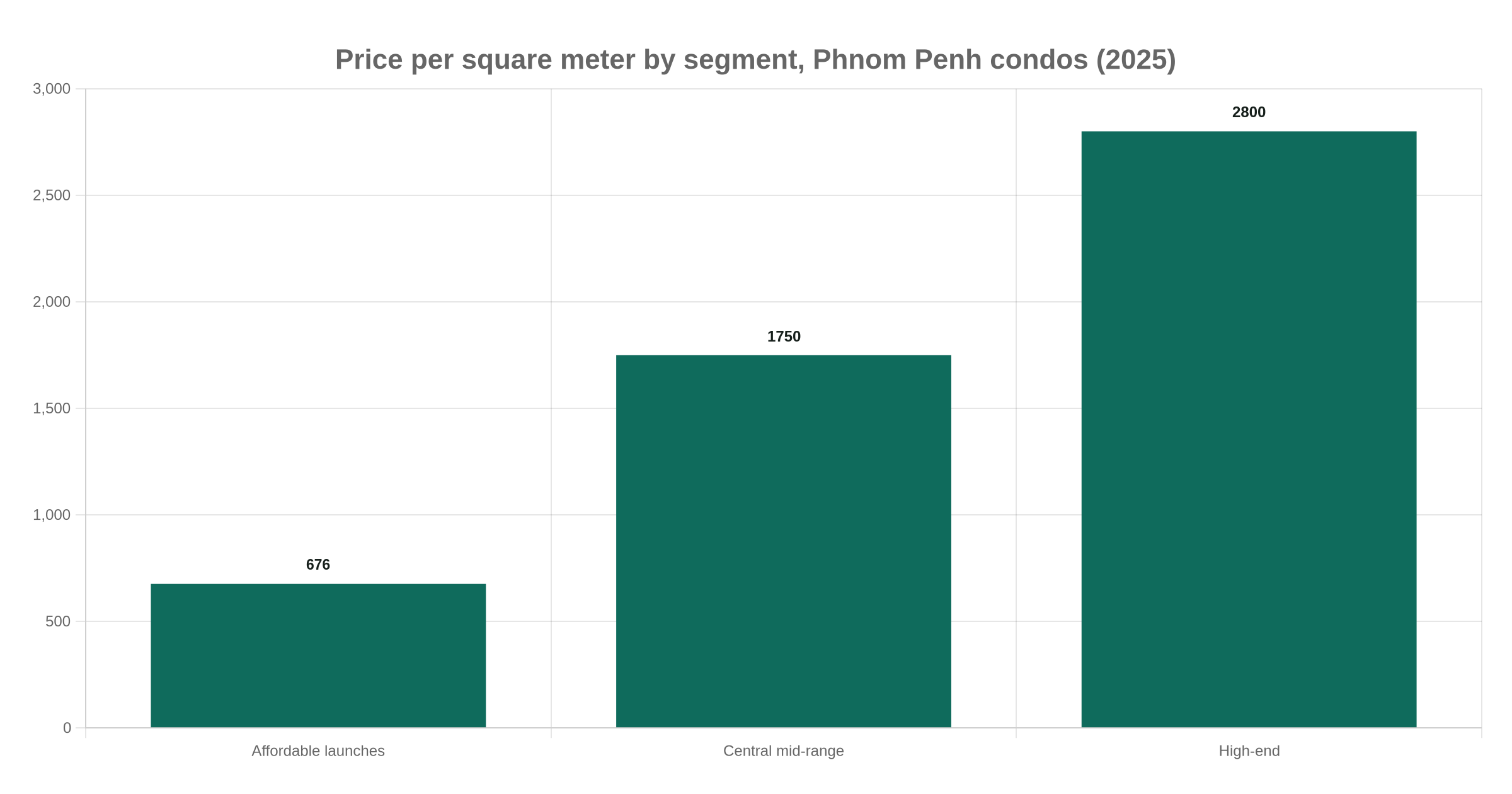
The tier decision usually comes down to unit count and update frequency, not visual ambition. A 45 square meter central mid-range unit at the roughly $1,750 per square meter midpoint of Knight Frank's $1,500 to $2,000-plus range prices out to about $78,750, a figure worth showing directly on the unit card. A single boutique building with 40 fixed units rarely needs a database. Picture an agency running six active projects with 500 combined units: a Bubble or Xano backend feeding both the website's live availability grid and the API feed to Realestate.com.kh from one source means a sold unit updates everywhere at once, instead of a coordinator editing the same figure in five places by hand.
Who should build it, and how we start
We build these sites from Phnom Penh, in the same ICT time zone (UTC+7) as the developers and agencies who commission them, on Webflow for a single-project showcase or a database-backed stack (Bubble, Xano) when the project needs a searchable listings platform. Most Cambodian developers do not need to outrank Realestate.com.kh; they need their own site to close a lead faster than a portal referral does.
Every sector we cover needs a different core feature: hotels need a hotel website built around a booking engine that keeps commission in-house, NGOs need an NGO website built around a donation flow that works without PayPal, and real estate needs a live availability grid paired with a fast-reply channel.
If your current site is a static brochure with a contact form nobody watches, book a call with our team. See real builds on our projects page, or get in touch and we will scope the specific features your project needs, not a generic template.
Prefer to chat? Message our founder directly on Telegram (@maxgrolier), or book a call with the team.
Frequently asked questions
Does a real estate website in Cambodia need its own booking or reservation system?
Not a payment-taking reservation system in most cases. Cambodian condo deposits and contracts are typically handled by an agent or the developer's sales office, so the website's job is to capture and qualify the lead, not to process the deposit. What it does need is a live availability status per unit and an instant way to message an agent through Telegram or WhatsApp rather than a generic form.
Can foreign buyers legally own a condo advertised on a Cambodian real estate website?
Yes, within limits. Cambodia's 2010 Foreign Ownership Property Law lets foreigners own up to 70 percent of the private units in a co-owned building, excluding ground and basement floors, with a strata title as proof of ownership (IPS Cambodia; Emerhub, 2026). Foreigners cannot own landed houses or land itself under Cambodia's constitution.
Should a small agency list only on Realestate.com.kh, or build its own site too?
Both, for different reasons. Realestate.com.kh and FazWaz-KH exist for discovery, reaching buyers who have no specific agency in mind yet (Realestate.com.kh; FazWaz-KH, September 2026). An agency's own site exists to convert the referrals, repeat clients, and paid ads that already carry the agency's name, which a shared portal listing cannot do as well.
How long does it take to build a real estate website with a live listings database in Cambodia?
Budget 2 to 4 months for a searchable, database-backed listings platform with a live availability grid, against 3 to 6 weeks for a single-project showcase site with static floor plans. The gap is mostly the database, the filter logic, and the bilingual content, not the visual design.
What is the difference between a hard title and a soft title, and does it belong on the website?
A hard title is registered nationally with the Ministry of Land Management, Urban Planning and Construction and carries the strongest legal protection; a soft title is only recognized locally and covers an estimated 70 percent of properties in major cities, rising to 80 percent in rural areas (Realestate.com.kh guide, 2026). Yes, it belongs on the website: stating the title type per property, in plain language, saves a foreign or first-time buyer from having to ask.
Does a real estate website in Cambodia need a Khmer-language version?
For a project selling primarily to the domestic market, yes, at least for the core pages: unit list, payment plan, and contact. For a project pitched purely at international buyers, English alone can work, but even then a Khmer contact option through Telegram or Messenger signals that the project is locally rooted, not offshore.
Have a project in mind?
Book a 30 minute call to see what we can do for you.
Recommended insights

TikTok Marketing in Cambodia Needs a Funnel, Not Just Views

Cambodia's Startups Need Fewer Incubators, More First Customers
A Real Estate Website in Cambodia Should Win on Speed, Not Listings

The first 90 days with a marketing agency in Phnom Penh

Most marketing agencies in Cambodia fix the wrong bottleneck

Digital marketing in Cambodia in 2026 is won in the inbox, not the feed

What a digital marketing agency in Cambodia really costs after tax
Why one Phnom Penh digital agency beats three specialists (usually)

What 4 weeks of AI development in Phnom Penh looks like, week by week

The Khmer token tax and what AI development in Cambodia really costs

Before you buy AI in Cambodia, run a 4-criteria consulting audit

What AI agents do for a small business, and what they cost to run
Four things an AI agency in Phnom Penh should hand you

Webflow agency: how we use Webflow on SME projects

Web development Cambodia: Webflow, no-code and custom builds compared


.svg)

.svg)