AI for hotels means using software that reads and replies to guest messages, adjusts room prices to demand, and automates back-office tasks like housekeeping schedules or fraud checks. In Cambodia in 2026, that definition matters less than the order you build it in. Most of what gets sold globally as "AI for hotels" assumes a property that already runs a property management system (PMS) and a channel manager. Most independent hotels in Cambodia do not.
This article separates what AI for hotels covers globally from what it should look like for a Cambodian property today: how many hotels actually exist, what messaging and revenue management each cost, and which one to build first.
What does "AI for hotels" actually mean in Cambodia right now?
AI for hotels in Cambodia right now means three distinct tools, not one product: guest messaging automation, demand-based pricing, and operational forecasting. Guest messaging automation reads WhatsApp, Telegram, Messenger and email inquiries, replies in the guest's language, and books or holds a room without a staff member typing the reply. Demand-based pricing (also called revenue management) adjusts room rates automatically based on occupancy, season, and competitor rates. Operational forecasting predicts staffing needs, maintenance issues, or housekeeping load from booking patterns.
Cambodia's version of this has a local twist. A hotel in Siem Reap or Phnom Penh is more likely to get its first inquiry on Telegram than on a hotel booking widget, since Telegram overtook Facebook as Cambodia's dominant messaging app after the country's own prime minister moved his account there in 2023. A guest from China or Vietnam, Cambodia's two largest source markets, is also more likely to message in Mandarin or Vietnamese than English, which makes translation the actual bottleneck long before pricing logic becomes relevant.
How many hotels in Cambodia could actually use this?
Cambodia had 1,159 hotels in 2025, up from 1,035 in 2024, with 95,588 hotel and guesthouse rooms nationwide, according to the Ministry of Tourism's 2025 tourism indicators report. International arrivals reached 5.57 million in 2025, down 16.9 percent year on year, while domestic trips climbed to 25.16 million, up 11.7 percent (Ministry of Tourism, 2025 indicators, cited by Khmer Times, 2026).
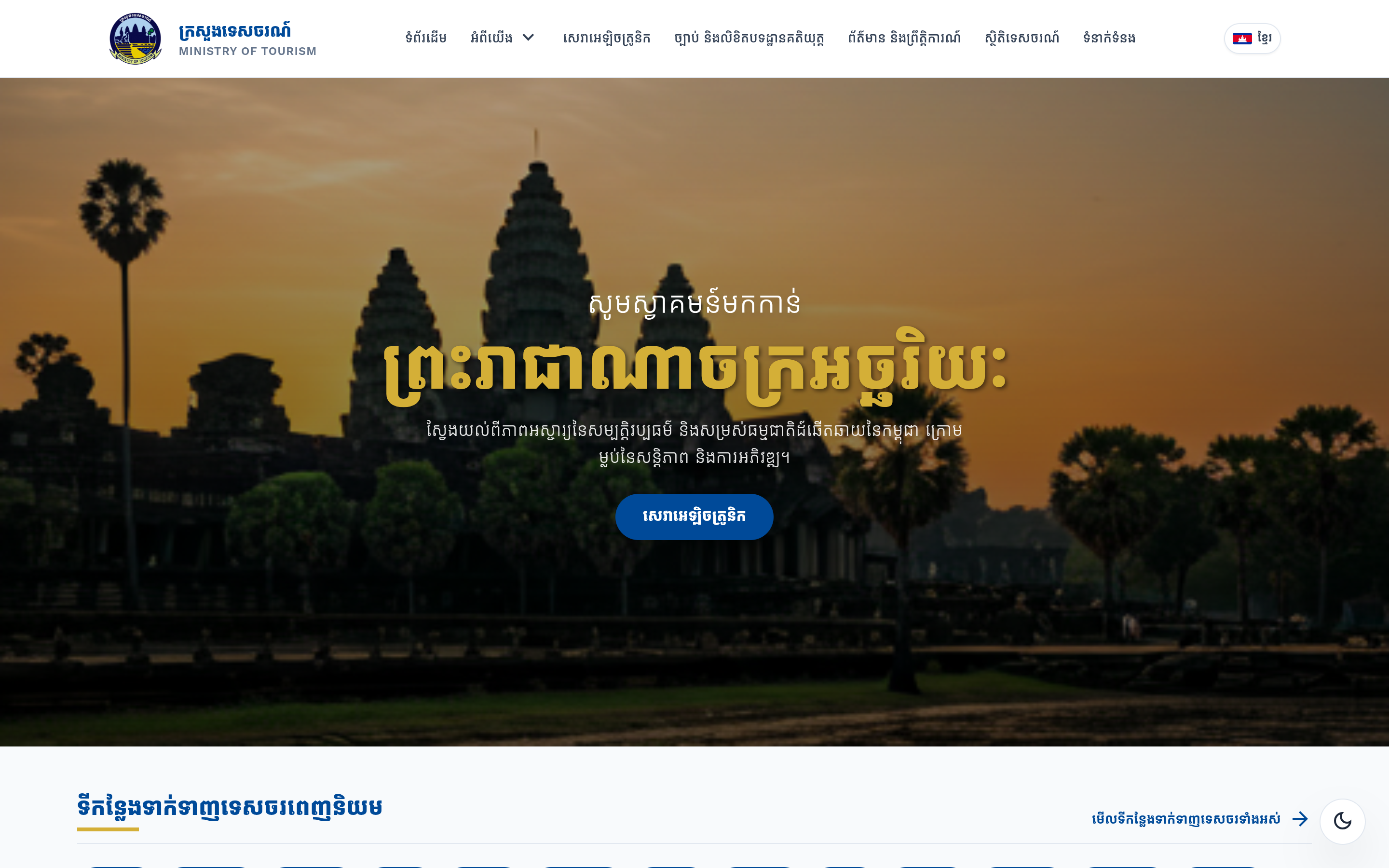
An average of 82 rooms per hotel across the whole count tells you most of this stock is small and independently run, not international-chain properties with an enterprise PMS already installed. That average number matters more than it looks: a 20 to 60 room independent hotel is exactly the segment global "AI for hotels" vendors write for last, because it is the segment least likely to already have the PMS integration their tools plug into.
What does AI guest messaging do, and what does it cost?
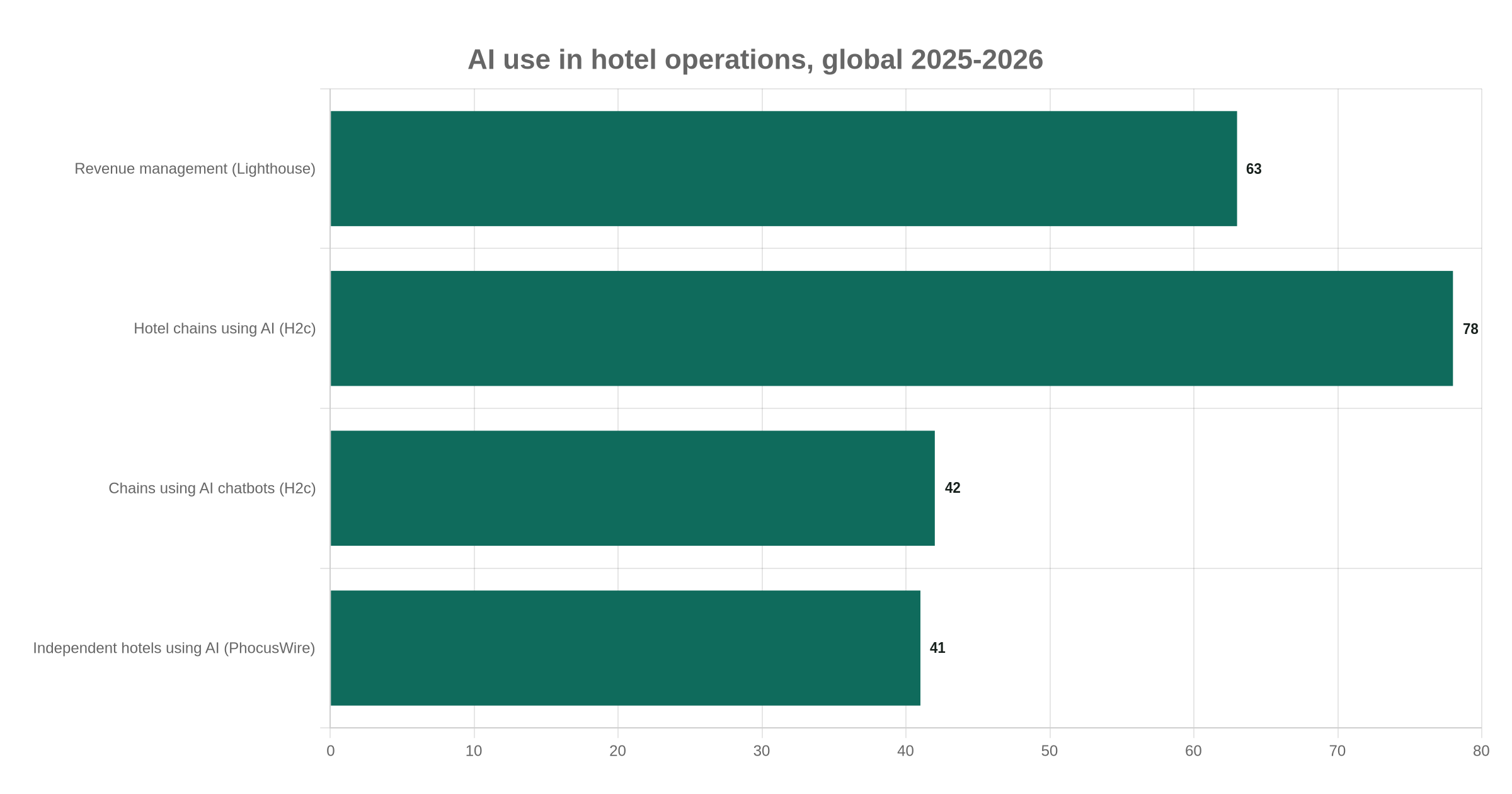
AI guest messaging routes WhatsApp, Telegram, Messenger and email inquiries into one inbox, replies automatically in the guest's language, and only escalates to a human for anything it cannot resolve. Globally, 78 percent of hotel chains already use AI in some form, and chatbots are the single most common deployment, used by 42 percent of chains (H2c, 2025 global study of 171 chains and over 11,000 properties). Among independent hotels, the figure is lower but still substantial at 41 percent (PhocusWire).
A realistic build looks like a one-day scoping call to map a hotel's current inquiry channels, three to five working days to wire WhatsApp, Telegram and Messenger into a single triage inbox with automatic translation, and one or two more days testing against real guest messages before go-live. The routing layer that watches each channel and hands the message to the model, commonly n8n, costs nothing to self-host or 20 euros a month on n8n's paid Cloud plan (n8n, 2026 pricing page). Running the model itself, on something like Claude Haiku 4.5, costs roughly 0.036 USD per English-language conversation and 0.082 USD per Khmer conversation, since Khmer script costs more tokens per sentence than English (figures we use consistently across our AI development in Cambodia coverage). For a 40-room hotel handling around 300 inquiries a month, mostly English with some Khmer, that model cost works out to under 25 USD: a few hundred conversations at four to eight cents each, against a single missed 11pm inquiry that could have booked a 35 USD room.
Consider a 40-room boutique hotel in Siem Reap taking bookings through Facebook Messenger, a Telegram number the owner checks between shifts, and walk-ins, with no shared calendar. A guest inquiry sent at 11pm can sit unanswered until the morning shift, while the room it asked about sells through a different channel overnight. That is the default state for a property with no unified inbox.
AI revenue management: does a small Cambodian hotel need it?
A small Cambodian hotel does not need AI revenue management yet if it has no PMS feeding it booking history, even though the tool itself works well once that data exists. AI revenue management adjusts room rates automatically based on demand, and 63 percent of hotels globally now use some form of it (Lighthouse, 2025). AI-driven pricing optimizers have generated upward of 15 percent growth in revenue per available room (RevPAR) at some hotels, according to hotel-industry analysts STR, cited in the Boston Consulting Group's 2026 AI-first hotels report. Among independent hotels specifically, 74.5 percent report positive results from AI overall, with 25.5 percent seeing 6 to 10 percent revenue increases and 35 percent seeing 11 to 20 percent increases (TakeUp's AI Hospitality Revolution report, 2025).
The catch is the median payback: 2 to 4 years (Deloitte, 2025). That payback assumes a hotel already has a PMS feeding clean occupancy and booking data into the pricing engine. A property still taking bookings by phone and Telegram has no data for a pricing engine to learn from, which means the revenue tool would sit idle waiting on an input the hotel has not built yet.
Why the usual AI-for-hotels sequencing is backwards for most Cambodian properties
Every guide in the current search results, from BCG to Cloudbeds to Canary Technologies, writes for a hotel that already has a PMS, a channel manager, and clean booking data. Their sequencing is messaging or pricing first depending on the vendor, then personalization, then forecasting. None of them account for a market where the median property is one of Cambodia's roughly 1,159 hotels averaging 82 rooms, independently run without an enterprise PMS.
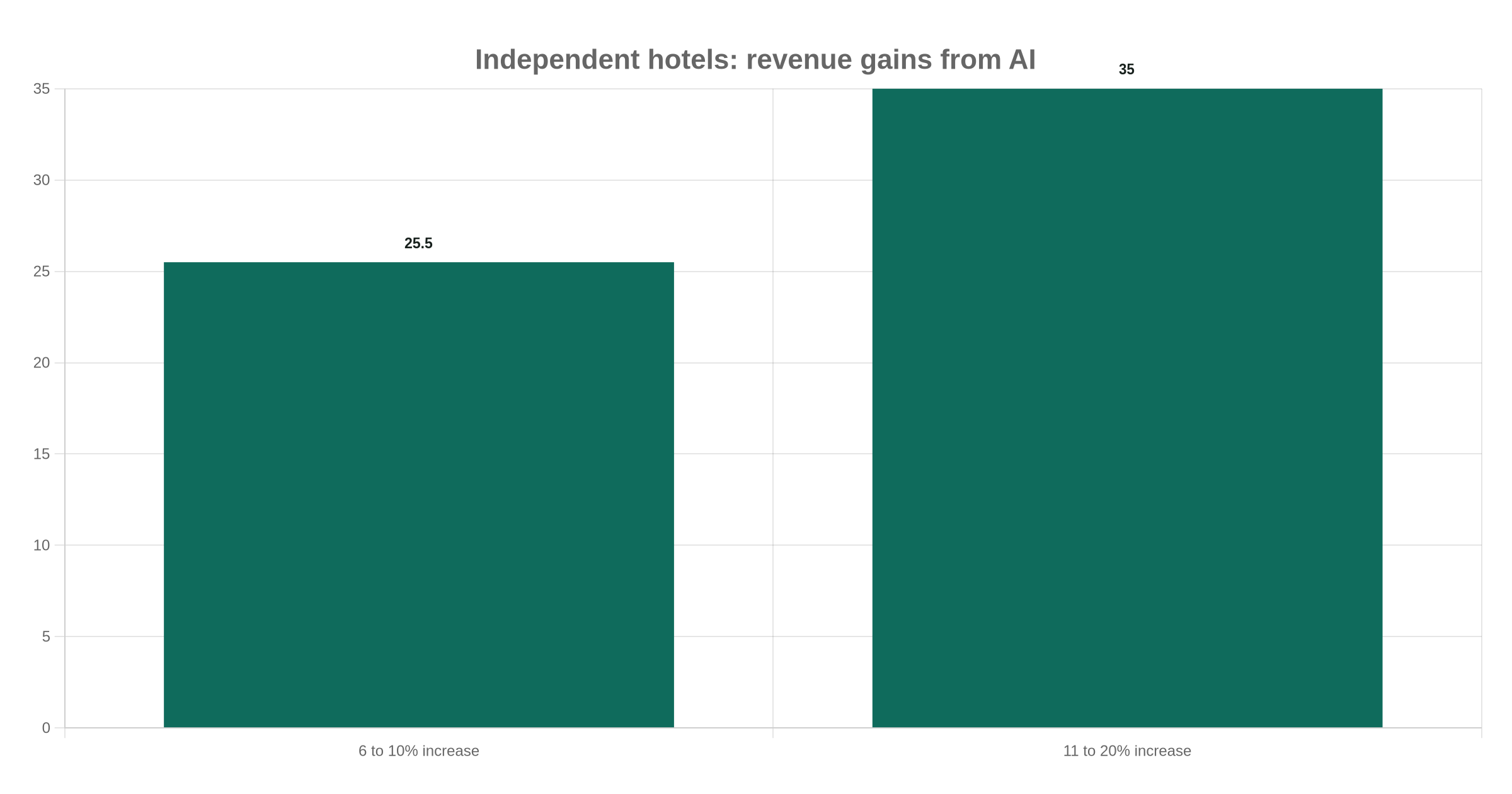
Those gains land on hotels that already had booking data to feed a pricing engine, the step most Cambodian independents have not built yet.
We think most independent hotels in Cambodia should build AI guest messaging before AI revenue management, because the sequencing the big hotel-tech vendors sell assumes a booking and payment backbone that most local properties do not have yet. A pricing engine needs historical occupancy data to optimize against; a hotel that has never logged that data systematically has nothing for the engine to learn from. Guest messaging, by contrast, needs no existing system. It plugs directly into WhatsApp, Telegram and Messenger, the channels a Cambodian hotel is already using, and starts generating usable booking data (who asked, when, for what dates, at what price they accepted) from day one. That data becomes the foundation a revenue tool needs later.
We would not recommend a small Siem Reap or Sihanoukville property spend its first AI budget on dynamic pricing, because a demand forecast is worthless if the inquiries that would fill those price-optimised rooms are still sitting unanswered in a personal Telegram account.
AI guest messaging vs AI revenue management: cost, speed, payback compared
Side by side, guest messaging wins on every axis except raw global adoption share: it needs no existing system, builds faster, and pays back as soon as it plugs a leak that was already costing bookings.
| AI guest messaging | AI revenue management | |
|---|---|---|
| Needs a PMS already running | No | Usually yes |
| Typical build time | About 2 weeks (inbox, translation, triage) | Weeks to months (needs historical booking data first) |
| Global adoption | 42% of hotel chains use chatbots (H2c, 2025) | 63% of hotels use some form (Lighthouse, 2025) |
| Cost driver | Per-conversation AI cost plus a short integration sprint | Software licence plus data setup and cleaning |
| Typical payback | Fast: plugs an existing revenue leak (missed inquiries) | Median 2 to 4 years (Deloitte, 2025) |
| Right first move for a small Cambodian hotel | Yes, start here | Wait until booking data exists |
Read the bottom row as the actual decision: a hotel with no PMS and no booking history starts on the left, not because revenue management fails, but because there is nothing yet for it to optimize against.
What should a small hotel in Cambodia do first?
A small hotel in Cambodia should fix its guest messaging before adding any pricing or forecasting tool. Start with a scoped process-mapping audit, one to two hours, to map every channel a guest currently uses to reach the property: Telegram, WhatsApp, Messenger, phone, walk-in. From there, a costed action plan takes about five days, and deployment of the actual inquiry-routing and translation system typically runs one to four weeks, depending on how many channels need wiring together and whether WhatsApp's Business API verification (which Meta requires before templated messages can send at scale) is already in place.
Once that inbox exists and has run for a few months, a hotel has the booking pattern data a revenue tool actually needs, and KHQR, accepted at 4.9 million merchants nationwide through the National Bank of Cambodia's Bakong system, already covers the payment side without a separate build. This is the same scoping discipline we bring as a Phnom Penh digital agency to every AI engagement: map what exists before recommending a stack, whether the client is a hotel or, as in our NGO website design coverage, a nonprofit weighing a donor-facing site against a shoestring budget. Our AI development in Cambodia coverage goes deeper on what a build like this costs in practice, and our broader look at Cambodia's tourism digital push covers the same sequencing question at the sector level. If a hotel or guesthouse wants a scoped estimate for its own AI agents project, or wants to see our past work for hospitality clients, get in touch.
Prefer to chat? Message our founder directly on Telegram (@maxgrolier), or book a call with the team.
Frequently asked questions
What is the fastest AI upgrade for a small hotel in Cambodia?
Wiring WhatsApp, Telegram and Messenger into one AI-assisted inbox with automatic translation is the fastest upgrade, typically a one to four week build once the inquiry channels are mapped, and it needs no existing PMS or booking software to start delivering value.
Does a hotel need a PMS before using AI?
Not for guest messaging. AI messaging tools plug directly into WhatsApp, Telegram, Messenger and email. AI revenue management, however, needs historical occupancy and booking data that usually comes from a PMS, which is why it is a second-stage investment for most independent Cambodian hotels.
How much does AI guest messaging cost to run monthly?
Model costs alone run around 0.036 USD per English-language conversation and 0.082 USD per Khmer conversation on a model like Claude Haiku 4.5. For a 40-room hotel handling a few hundred inquiries a month, that is typically under 25 USD in model cost, on top of the initial integration build.
Can AI handle guest messages in Khmer, Chinese and Vietnamese?
Yes. Modern language models translate and reply across Khmer, Mandarin, Vietnamese and English within the same conversation, which matters directly for Cambodia since China and Vietnam are its two largest international source markets.
Is AI revenue management worth it for a 20 to 40 room guesthouse?
Not immediately. AI revenue management needs clean historical booking data to optimize pricing against, and the median payback period is 2 to 4 years even for hotels with that data already in place (Deloitte, 2025). A small guesthouse without that data foundation gets more value building its guest-messaging system first.
How many hotels are there in Cambodia to serve with this kind of technology?
The Ministry of Tourism counted 1,159 hotels and 95,588 hotel and guesthouse rooms nationwide in 2025, up from 1,035 hotels in 2024, the large majority independently owned and operated rather than international chain properties.