Cambodia's government spent World Tourism Day 2026 telling hotels, tour operators and community tourism businesses to accelerate digital transformation and adopt AI, faster. Prime Minister Hun Manet and Minister of Tourism Huot Hak both delivered the message within the same week, on 23 and 27 September 2026, aimed squarely at micro, small and medium tourism enterprises, family businesses and artisans, not just the big resort chains. The same week's official numbers show why the urgency: international arrivals for the first seven months of 2026 fell 46.2 percent year-on-year, even as domestic visits rose 47.6 percent.
This article separates the announcement from the news cycle around it: what Cambodia's tourism authorities actually asked for, why the timing is not a coincidence, what digital infrastructure already exists to build on, and what a small hotel or tour operator should realistically do first.
What is Cambodia's digital transformation push actually asking tourism businesses to do?
Cambodia's digital transformation push for tourism asks businesses to adopt AI and digital tools for service quality, marketing, and data-driven decisions, starting with the operators least likely to have them already. The push came from two directions in the same week. On 23 September 2026, PM Hun Manet issued a message ahead of World Tourism Day urging micro, small and medium tourism enterprises, family businesses, artisans and community tourism operators to build digital capabilities and marketing skills, arguing this expands market access, raises income and creates local jobs (The Star, 26 September 2026).
Four days later, Cambodia marked World Tourism Day 2026 under the theme "Digital Agenda and Artificial Intelligence to Redesign Tourism," at the Bayon Era Hotel in Siem Reap, organised with UN Tourism. Minister of Tourism Huot Hak framed the ask as "Smart, Safe and Warm": use AI and digital tools to improve service quality and tourist experience, and to support policymaking, product development, marketing and data-driven decisions (AKP, 27 September 2026). The same event officially rolled out the ASEAN Safe and Warm Stamp, a Cambodia-initiated regional certification spanning eight tourism service categories, aimed at raising safety, hygiene and visitor confidence across ASEAN destinations.
The digital push lands as tourism arrivals fall 46 percent
The timing is not incidental. Cambodia welcomed 1,997,821 international tourists in the first seven months of 2026, down 46.2 percent from the same period in 2025, while domestic visits reached 23,802,124, up 47.6 percent (Ministry of Tourism data cited by The Star, 26 September 2026). Over the first eight months, international arrivals stood at 2.25 million, down 44.4 percent from 4.05 million a year earlier, with China (588,051) and Vietnam (585,711) as the largest source markets, and air travel accounting for 63 percent of entries against 37 percent by land and water (Khmer Times, September 2026).
| International arrivals, H1 2026 | Domestic visits, H1 2026 | |
|---|---|---|
| Volume | 1,997,821 | 23,802,124 |
| Year-on-year change | down 46.2% | up 47.6% |
| Ministry framing | regional slowdown, border tensions, higher fuel costs | filling the demand gap |
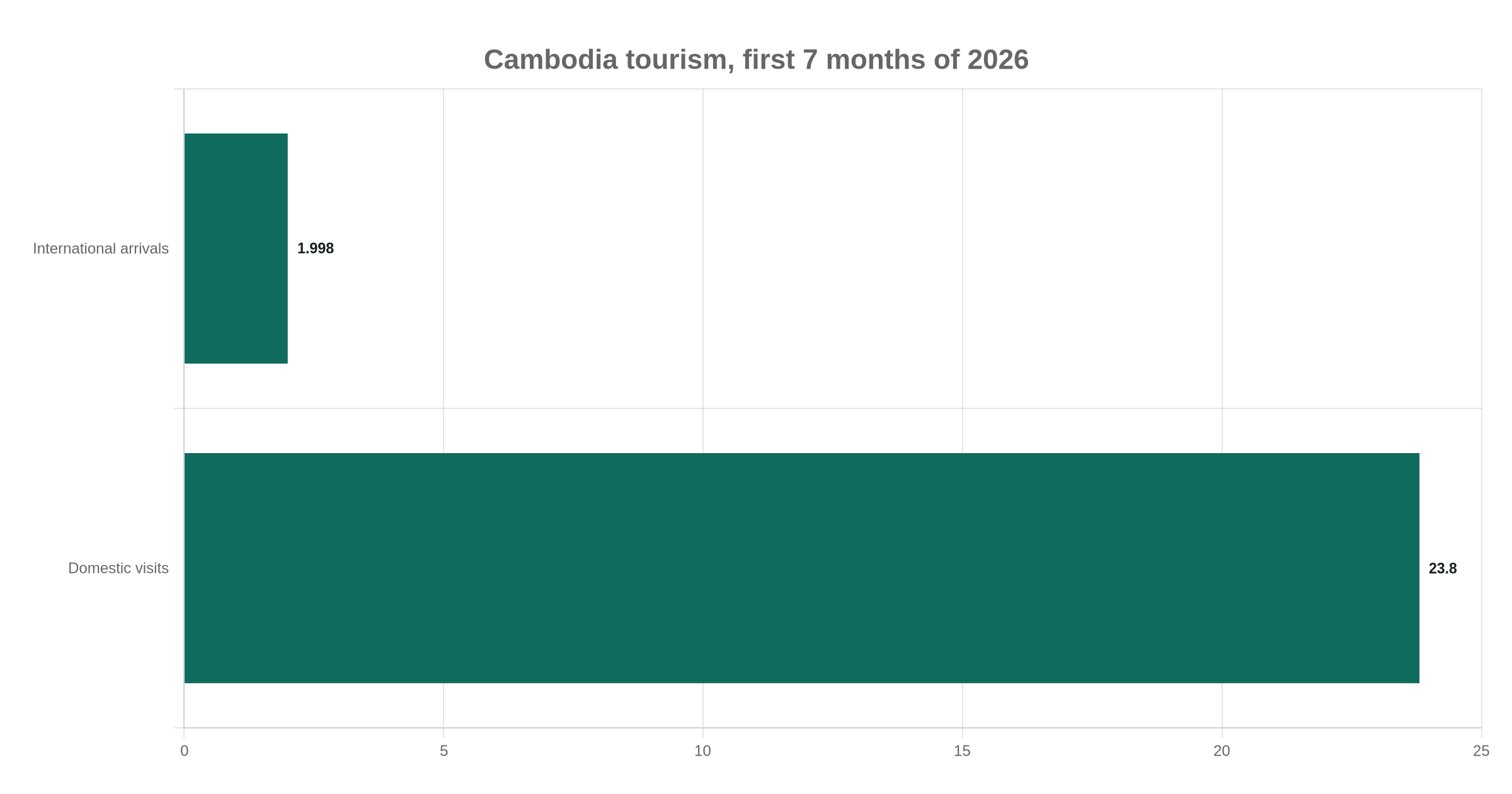
Tourism contributed 9.4 percent of Cambodia's GDP in 2024 (Open Development Cambodia, citing the Ministry of Tourism), so a near-halving of international arrivals is not a rounding error. Read against that, the digital push is best understood as demand capture, not modernisation for its own sake. A Phnom Penh family booking a weekend in Kep does not search, decide or pay the way a tour group from China does. The operators who can catch that domestic wave digitally have a real chance of offsetting the international drop while it lasts. That means a bookable listing, a fast reply on Telegram, and a KHQR payment link.
The digital infrastructure Cambodia's tourism sector already has
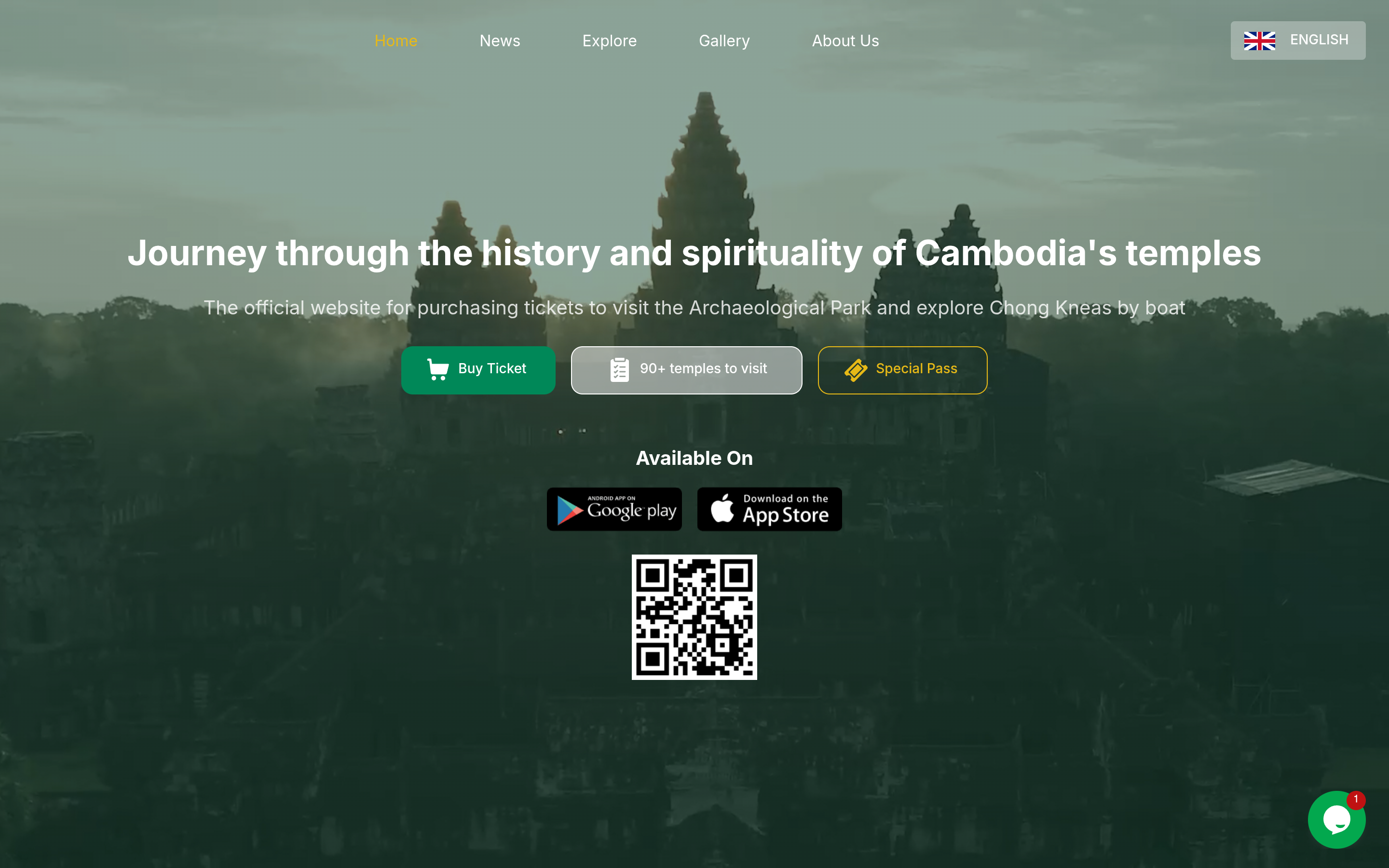
Cambodia is not starting from zero. Angkor Enterprise, which manages entry to the Angkor Archaeological Park, already sells tickets online, through its app, at 15 self-service kiosks across three locations, and at ticket offices, with every route ending in a QR-code pass instead of a paper stub (Khmer Times, January 2025). It is the clearest existing proof that digital tourism infrastructure works at scale in Cambodia.
Payments are further along than most visitors expect. The National Bank of Cambodia's KHQR standard is accepted at 4.9 million merchants through the Bakong system, and the Bakong Tourist App extends that same QR-code rail to visitors without a Cambodian bank account, closing the gap that used to keep KHQR resident-only (fintechnews.sg, February 2025, citing NBC data). On the marketing side, Cambodia's Tourism AR app, launched 7 June 2026 at the Novotel in Phnom Penh (Khmer Times, 7 June 2026), lets visitors point a phone at a site and pull up cultural and historical layers on top of it. None of this needed to be invented by an individual hotel or tour operator; it is rail a business can plug into.
What should a small hotel do first?
A small hotel should fix its digital front door before adding any AI: one accurate listing, one bookable page, one inbox for guest messages, and KHQR at the counter. Take a 40-room boutique hotel in Siem Reap that takes bookings through Facebook Messenger, a Telegram number the owner checks between shifts, and walk-ins. A guest who messages at 11pm on WhatsApp can wait until the morning shift for a reply, while the room they asked about sells through a different channel in the meantime.
Illustrative estimate, not a measured result: if that pattern happens just once a week, that is roughly 52 missed inquiries a year for a single 40-room property. At a conservative $35 average nightly rate and a modest 40 percent close rate on inquiries that do get a same-day reply, those 52 missed inquiries work out to around $728 a year in bookings that never had a chance to convert, before counting the guests who mention the slow reply to the next traveller. The number is a sizing exercise, not an audited figure, but the direction holds: an unanswered channel is a leak, not a convenience issue.
We think most Cambodian hotels do not need a custom AI system right now. They need one working digital front door first. A chatbot bolted onto a broken booking flow just automates the confusion faster. Our AI for hotels coverage goes deeper on that build once the front door is fixed, and our piece on what a hotel website needs covers the booking engine itself, the part most Siem Reap and Sihanoukville hotel sites still skip.
What about tour operators and community tourism networks?
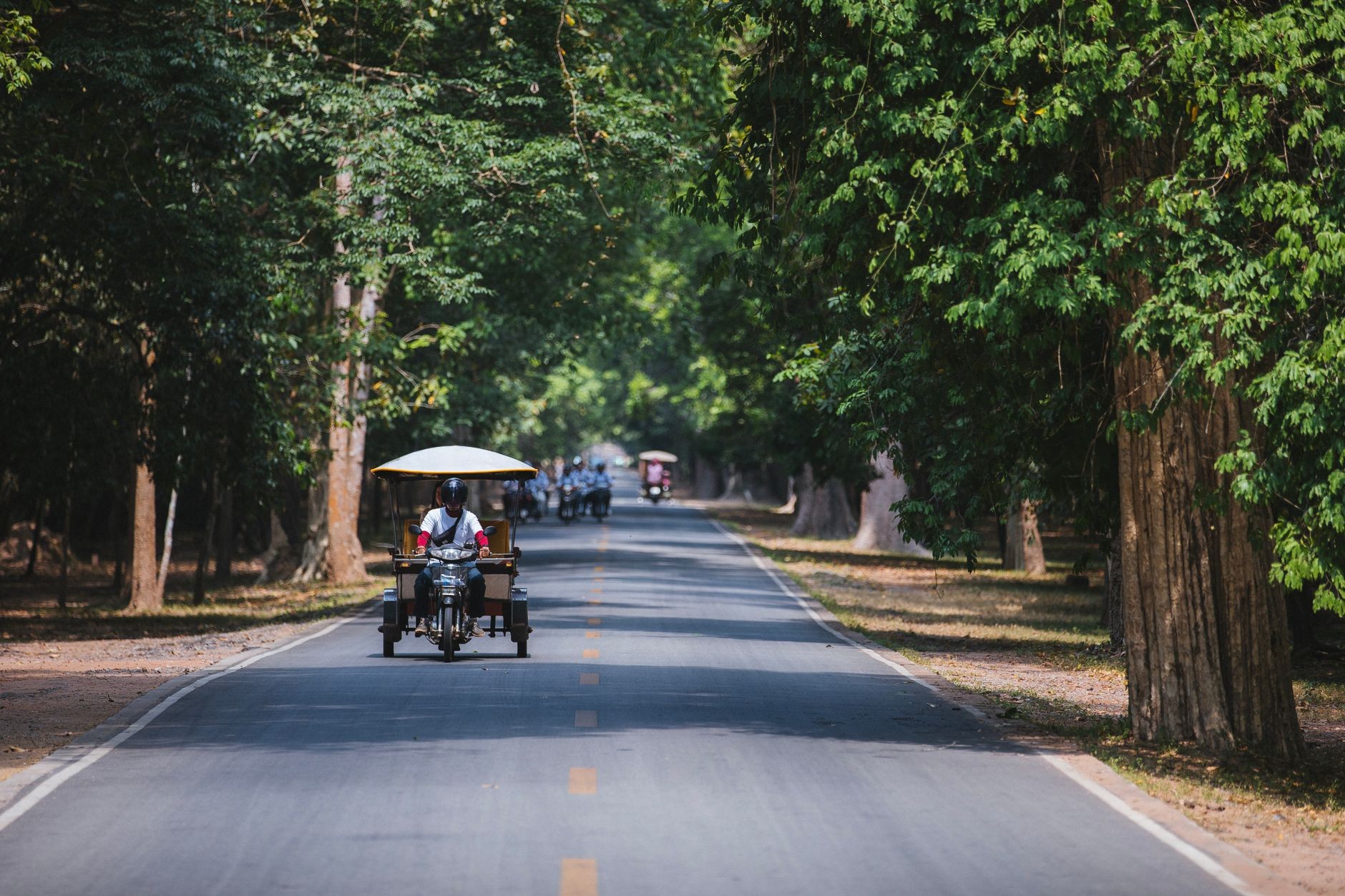
The same gap shows up further down the market, not just in hotels. A Siem Reap tuk-tuk driver running day tours to Angkor and Kulen Mountain often takes bookings across a personal Telegram account, a separate WhatsApp number that guesthouses use to refer guests, and cash deals negotiated at the tuk-tuk rank. Two overlapping bookings for the same morning are indistinguishable until a guest shows up expecting a driver who already left with someone else.
A community homestay network in Kampot faces the same problem multiplied across five or six households: whoever's phone rings first gets the guest, with no shared calendar to stop a double-booking or to stop one homestay sitting empty while the next one over turns guests away. Neither business needs a full website rebuild to fix this, just one shared list of who is booked when, checked before a yes goes out.
We would prioritise that one shared calendar over any AI layer for operators at this scale: the fix costs little and closes the exact leak the PM's own message is aimed at, family businesses and artisans losing bookings to a coordination gap, not a marketing gap.
Where does AI actually help a tourism business in Cambodia right now?
AI helps a Cambodian tourism business most concretely in three places today: multilingual inquiry triage, demand-aware pricing, and turning scattered local knowledge into content search engines can actually find. With China and Vietnam as the two largest source markets, a small operator answering inquiries in English alone is already losing bookings to slower, translated replies. Routing WhatsApp, Telegram and Messenger inquiries into one queue with automatic translation closes that gap without hiring bilingual staff for every shift.
A realistic build looks like a one-day scoping call to map the hotel's inquiry channels, three to five working days to wire WhatsApp, Telegram and Messenger into a single triage inbox with translation, and one or two days testing it against real guest messages before go-live: roughly a two-week sprint, not a platform rebuild. One detail that catches teams off guard: WhatsApp's official Business API requires Meta's business verification before a number can send templated messages at scale, a review that can add several days, so it belongs in the scoping call, not discovered the week of go-live.
We would prioritise digitising payments and inquiry handling over AI-generated marketing: with domestic visits up 47.6 percent while international arrivals are down 46.2 percent, the operators who get through this stretch are the ones who can process a fast-changing, price-sensitive domestic booking pattern, not the ones with the most sophisticated AI content. Cambodia's 12.0 million internet users, 67.3 percent of the population as of October 2025 (DataReportal, Digital 2026 Cambodia), are mostly booking and messaging from a phone, where a fast reply matters more than a polished campaign.
What's next for Cambodia's tourism digital transformation push?
PM Hun Manet paired the push with explicit cautions: cybersecurity threats, data privacy, misinformation and unequal access all need managing, and technology has to be deployed in a way he described as people-centered, inclusive, safe, transparent and responsible (Kampuchea Thmey Daily, 25 September 2026). He was equally direct that Khmer identity, hospitality, culture, traditions and natural attractions, has to stay central rather than get replaced by the tools meant to promote it.
For a hotel or tour operator, the practical version of that caution is sequencing: fix the booking and payment basics, then add AI where it removes real friction. This is the same prioritisation work we do as a Phnom Penh digital agency: scope what a business actually needs before recommending a stack. Our AI development coverage goes deeper on what that build looks like in practice; our AI agents service line covers the inquiry-routing and translation work described above, and our web development work covers the booking page and listing side of the same problem. If a hotel or tour operator wants a second opinion on where to start, get in touch.
Prefer to chat? Message our founder directly on Telegram (@maxgrolier), or book a call with the team.
Frequently asked questions
What did Cambodia's government announce for World Tourism Day 2026?
The Ministry of Tourism marked World Tourism Day 2026 on 27 September under the theme "Digital Agenda and Artificial Intelligence to Redesign Tourism," in partnership with UN Tourism, and officially rolled out the ASEAN Safe and Warm Stamp, a regional safety and hygiene certification across eight tourism service categories.
Is AI or digital adoption mandatory for Cambodian tourism businesses?
No. Both PM Hun Manet's 23 September message and Minister Huot Hak's World Tourism Day remarks were calls to adopt digital and AI tools, aimed especially at MSMEs and family businesses, not a mandate with a compliance deadline attached.
How many tourists has Cambodia welcomed in 2026 so far?
International arrivals reached 1,997,821 in the first seven months of 2026, down 46.2 percent year-on-year, and 2.25 million over the first eight months, down 44.4 percent, while domestic visits over the same first seven months rose 47.6 percent to 23,802,124.
What is the ASEAN Safe and Warm Stamp?
It is a regional certification, initiated and coordinated by Cambodia, that spans eight tourism service categories and is awarded to operators meeting common ASEAN safety, hygiene and visitor-confidence standards, with certification carried out at the national level by each country's tourism ministry.
Do tourists need a Cambodian bank account to pay by KHQR?
Not anymore. The Bakong Tourist App extends Cambodia's KHQR payment standard, accepted at 4.9 million merchants, to visitors without a Cambodian bank account, closing a gap that previously made KHQR mostly a resident-only payment method.
Where can a small tourism business in Cambodia get help going digital?
Fixing the booking, inquiry and payment basics is standard web development work, and routing multilingual inquiries or building pricing logic is where AI agents add value once those basics exist. Both are the kind of scoped, phased work a digital agency can start with a short discovery call.